Are We Letting Scripture Shape Us?
One of the greatest dangers for Christians today is not always outright rebellion against God—it is slowly drifting into a faith where our emotions, assumptions, culture, and personal experiences begin shaping our understanding of Him more than His Word does.
This can happen so subtly.
We stop opening our Bibles consistently. We rely more on inspirational content than Scripture itself. We begin approaching God through our feelings instead of allowing His truth to inform our hearts. And before long, we can find ourselves asking questions about God that reveal just how little we truly know of His character.
This is exactly why the story of Gideon in Book of Judges chapter 6 is so encouraging for weary believers, young women in the faith, busy mothers, and even mature Christians who may have grown distant from daily time in God’s Word.
Because Gideon’s story is not ultimately about a brave man—it is about a gracious God who patiently reveals Himself to weak and fearful people.
“If God Is Really With Us…”
When we first meet Gideon in Judges 6, Israel is suffering under Midianite oppression because they had abandoned the Lord and turned toward false gods.
Gideon’s response to the angel of the Lord sounds strikingly familiar:
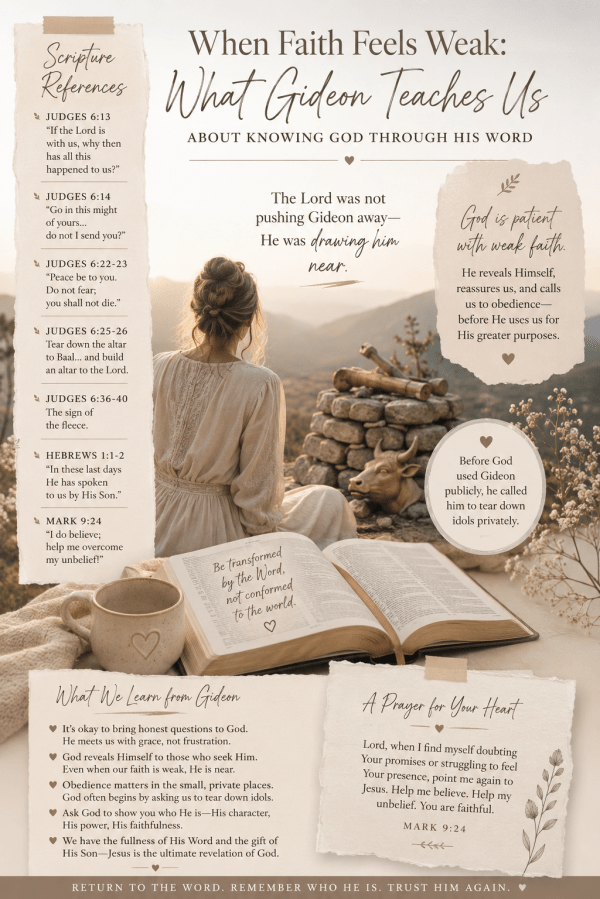
“Please, my lord, if the Lord is with us, why then has all this happened to us?”
— Judges 6:13
How many of us have quietly asked the same question?
If God is with me, why is motherhood so exhausting? Why does suffering continue? Why does obedience feel costly? Why does life feel heavy? Why are prayers unanswered?
Gideon struggled to reconcile his circumstances with the promises of God. Yet what is remarkable is that God does not respond harshly to Gideon’s weakness.
Instead, the Lord answers:
“Go in this might of yours… do not I send you?”
— Judges 6:14
God was already at work accomplishing His purposes through a man who felt weak, fearful, and inadequate.
And that should deeply encourage us.
Because throughout Scripture, God has never required perfect strength from His people before using them. He calls us to trust Him in the midst of our weakness.
God Reveals Himself to Weak Faith
One of the most comforting parts of this chapter is seeing how patient God is with Gideon.
After encountering the angel of the Lord, Gideon becomes afraid and believes he may die. But the Lord reassures him:
“Peace be to you. Do not fear; you shall not die.”
— Judges 6:23
The Lord was not pushing Gideon away because his faith was weak. He was drawing him closer.
This matters because many Christians wrongly assume that struggling believers are immediately met with frustration from God. But throughout Scripture we repeatedly see the Lord patiently strengthening weak faith.
That does not mean God celebrates unbelief. But it does mean He is compassionate toward those who genuinely desire to know Him and trust Him more fully.
Before Public Victory Came Private Obedience
After comforting Gideon, God gives him a difficult command.
In Judges 6:25–26, Gideon is told to tear down his father’s altar to Baal, cut down the Asherah pole beside it, and build an altar to the Lord in its place.
This was a bold act of obedience.
The bull being sacrificed symbolized devotion to Baal, the false god Israel had been worshiping. By tearing down these idols, Gideon publicly declared that the gods Israel trusted were powerless.
But before God would use Gideon to deliver Israel publicly, Gideon first had to obey privately.
And honestly, this is where many of us struggle too.
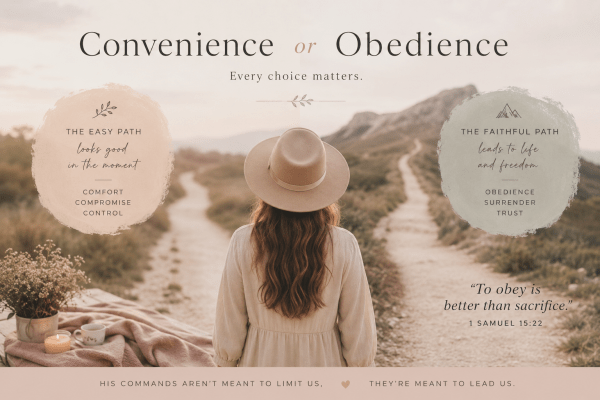
Sometimes the idols in our lives are not obvious statues or pagan altars. Sometimes they are comfort, control, approval from others, entertainment, political identity, self-sufficiency, busyness, or even our own feelings.
When we neglect God’s Word long enough, we slowly begin creating a version of God that fits our preferences rather than submitting ourselves to who He truly is.
Scripture was never meant to conform to us.
We are meant to be conformed by Scripture.
What About Gideon and the Fleece?
One of the most misunderstood parts of Gideon’s story is the sign of the fleece in Judges 6:36–40.
Many people use this passage to justify asking God for random signs:
“Lord, if you want me to take this job, let someone call me today.”
But Tim Keller points out in Judges For You that Gideon was not asking for vague personal signs to help him make ordinary decisions.
Gideon was specifically asking God to reveal His nature.
Baal was believed to be a storm and fertility god tied to nature. Gideon’s request involving dew and dry ground was actually asking God to demonstrate that He alone was sovereign over creation itself.
Gideon’s faith was weak, but his questioning was leading him toward a deeper understanding of who God truly was.
That distinction matters.
Because there is a difference between demanding signs from God out of unbelief and asking God to strengthen weak faith through greater understanding of His character.
We Have What Gideon Longed For
One of the most humbling realities in this passage is recognizing that Gideon did not have what believers today possess.
He did not have the completed Word of God.
He did not know Christ as we do now.
He did not have the ordinary means of grace God has given the Church through Scripture, Christian fellowship, baptism, and the Lord’s Supper.
Hebrews 1:1–2 says:
“Long ago, at many times and in many ways, God spoke to our fathers by the prophets, but in these last he has spoken to us by his Son…”
Gideon’s request was to help build up his faith. God in his Grace responded twice and when we make the same request – God graciously responds by pointing us to the fullest and final revelation of his character and his purposes – the Lord Jesus.
When we find ourselves doubting God’s promises or God’s presence, we can ask him to point us again to his son saying, “I do believe help me overcome my unbelief” (Mark 924). This is what Gideon needed and received. God will do the same for us.
Are there parts of your life today where you need to ask God to point you to his son so that you can trust more fully in His promises?