A Convenient Religion
Judges 17:7–13
“It is possible to seek God’s blessing while refusing God’s authority.”
The Most Dangerous Kind of Religion
If someone asked you what spiritual rebellion looks like, what would you picture?
Would you imagine someone abandoning church?
Rejecting Christianity?
Walking away from God altogether?
That is often what we think rebellion looks like.
Yet Judges 17 presents a far more subtle danger.
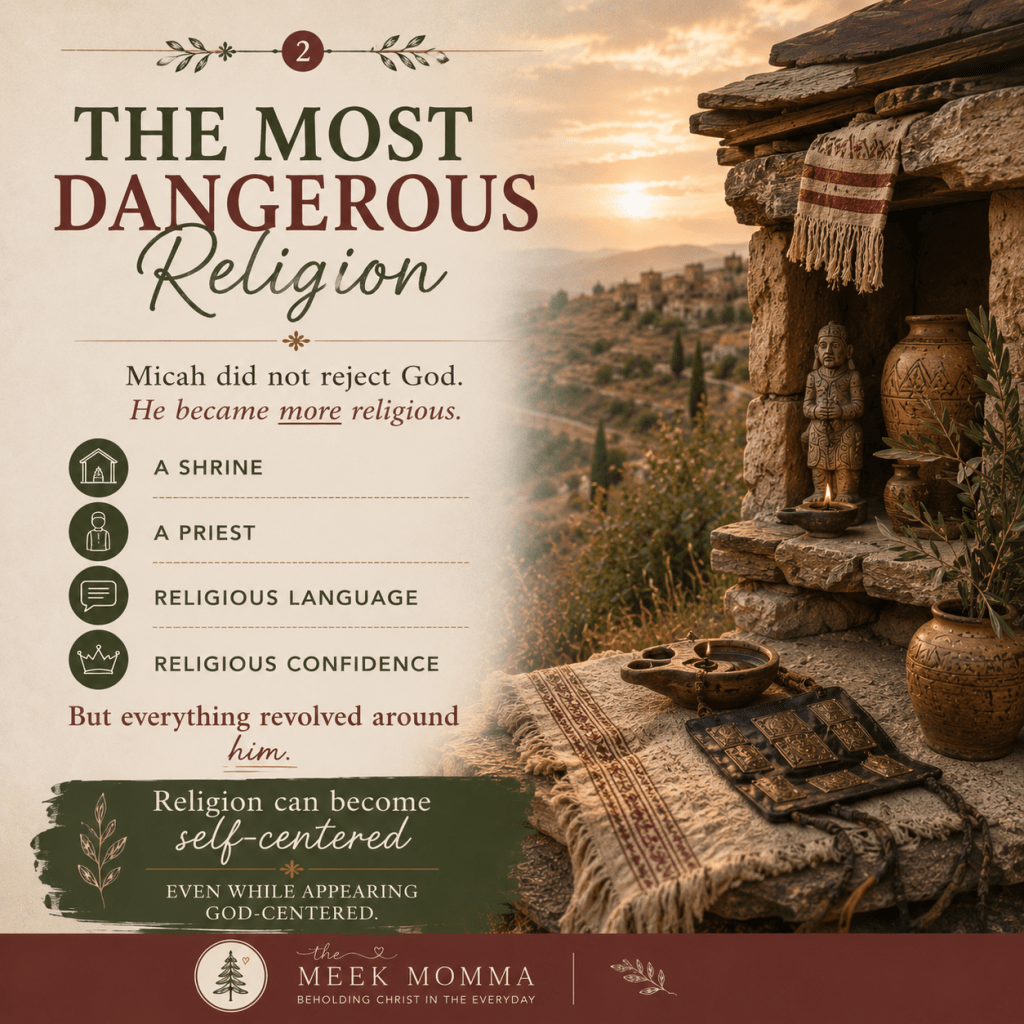
Micah does not reject religion.
In fact, he becomes increasingly religious.
He has a shrine.
He has idols.
He has an ephod.
He has household gods.
Now he wants a priest.
The problem is not a lack of religious activity.
The problem is that everything revolves around Micah.
The religion is designed for his convenience.
His preferences.
His control.
And if we are honest, that temptation remains alive in every generation.
A Levite Looking for a Better Opportunity
The story introduces a young Levite from Bethlehem in Judah.
This should immediately raise questions.
The Levites were the tribe set apart by God for spiritual service. Their inheritance was not land but the privilege of serving the Lord and teaching His people.
Yet here we find a Levite wandering the countryside looking for a place to settle.
Why?
The text does not tell us directly.
But it reveals something troubling.
The spiritual leadership of Israel has become just as unstable as the people they are meant to shepherd.
The Levite arrives at Micah’s house, and Micah quickly sees an opportunity.
He offers him a position:
“Stay with me, and be to me a father and a priest.” (Judges 17:10)
Notice the language.
Micah does not ask what God desires.
He asks what will benefit him.
He wants a personal priest.
Someone attached to his private shrine.
Someone who can provide religious legitimacy to a system God never authorized.
And the Levite accepts.
Not because it is faithful.
But because it is profitable.
For ten shekels of silver, clothing, and food, he becomes Micah’s employee.
The arrangement appears spiritual.
But underneath it is a business transaction.
Micah gets religious credibility.
The Levite gets security.
Neither appears concerned with obedience to God.
Religion on Our Terms
What Micah is building is not true worship.
It is personalized religion.
God had already established where and how Israel was to worship.
The tabernacle stood as the place where sacrifices were offered and God’s presence was uniquely displayed among His people.
Yet Micah decides that God’s arrangement is inconvenient.
He creates his own.
His own shrine.
His own priest.
His own system.
His own rules.
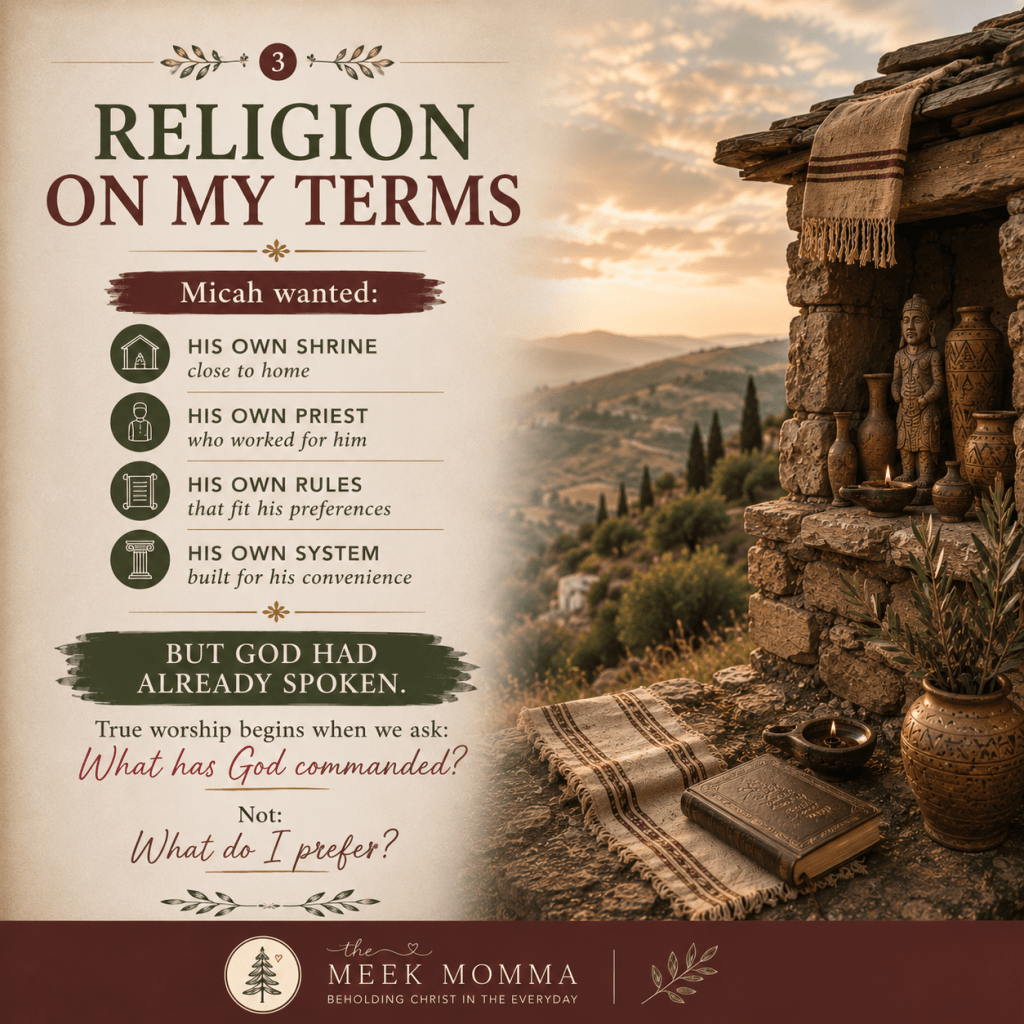
Everything is customized according to his preferences.
This is the natural progression of the human heart.
When we begin reshaping God, we eventually begin reshaping worship.
Tim Keller summarizes the problem well:
“God says, worship Me as I am, not as you want Me to be. Worship Me as My Word directs, not as your heart suggests.”
That is precisely what Micah refuses to do.
And before we judge him too harshly, we should recognize how often we are tempted to do the same.
We may not build shrines in our homes.
But we frequently approach faith as consumers rather than disciples.
We ask:
What works for me?
What makes me comfortable?
What fits my schedule?
What aligns with my preferences?
The modern world encourages us to customize everything.
Our entertainment.
Our news.
Our shopping.
Our social media feeds.
And if we are not careful, we begin treating Christianity the same way.
Instead of asking, “What has God commanded?”
We ask, “What do I like?”
Wanting God’s Blessing Without God’s Authority
The climax of the story comes in verse 13.
Micah proudly declares:
“Now I know that the Lord will prosper me, because I have a Levite as priest.”
This statement reveals the true condition of his heart.
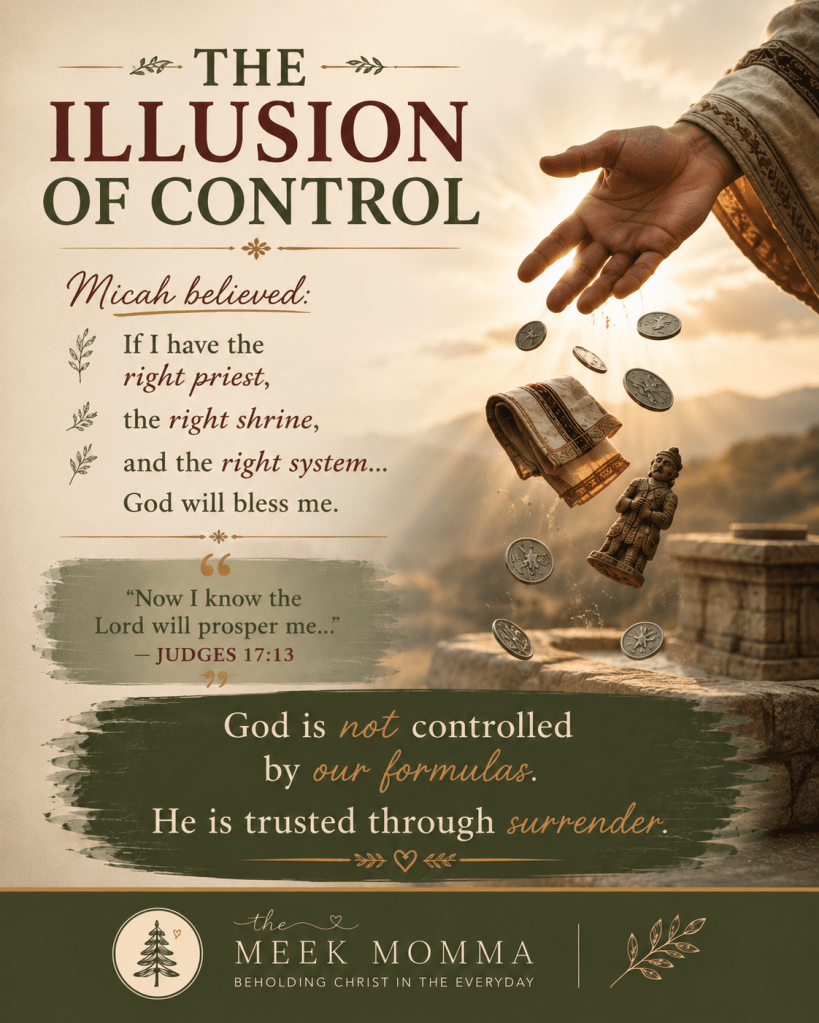
Micah believes he has found the formula for blessing.
He has assembled all the religious pieces.
He has the shrine.
Yet Micah has misunderstood something fundamental.
He has the idols.
He has the priest.
Surely now God will bless him.
God’s blessing is not a reward for manipulating religious systems.
God cannot be controlled.
He cannot be purchased.
He cannot be managed.
Micah treats worship almost like a superstition.
As though gathering enough religious objects and religious people will guarantee divine favor.
Yet genuine faith is not about controlling God.
It is about surrendering to Him.
This temptation remains incredibly common today.
We can begin treating prayer like a formula.
Church attendance like a transaction.
Bible reading like a spiritual insurance policy.
We subtly convince ourselves that if we perform the right activities, God owes us certain outcomes.
But God is not interested in being used.
He desires to be worshiped.
The Better Priest
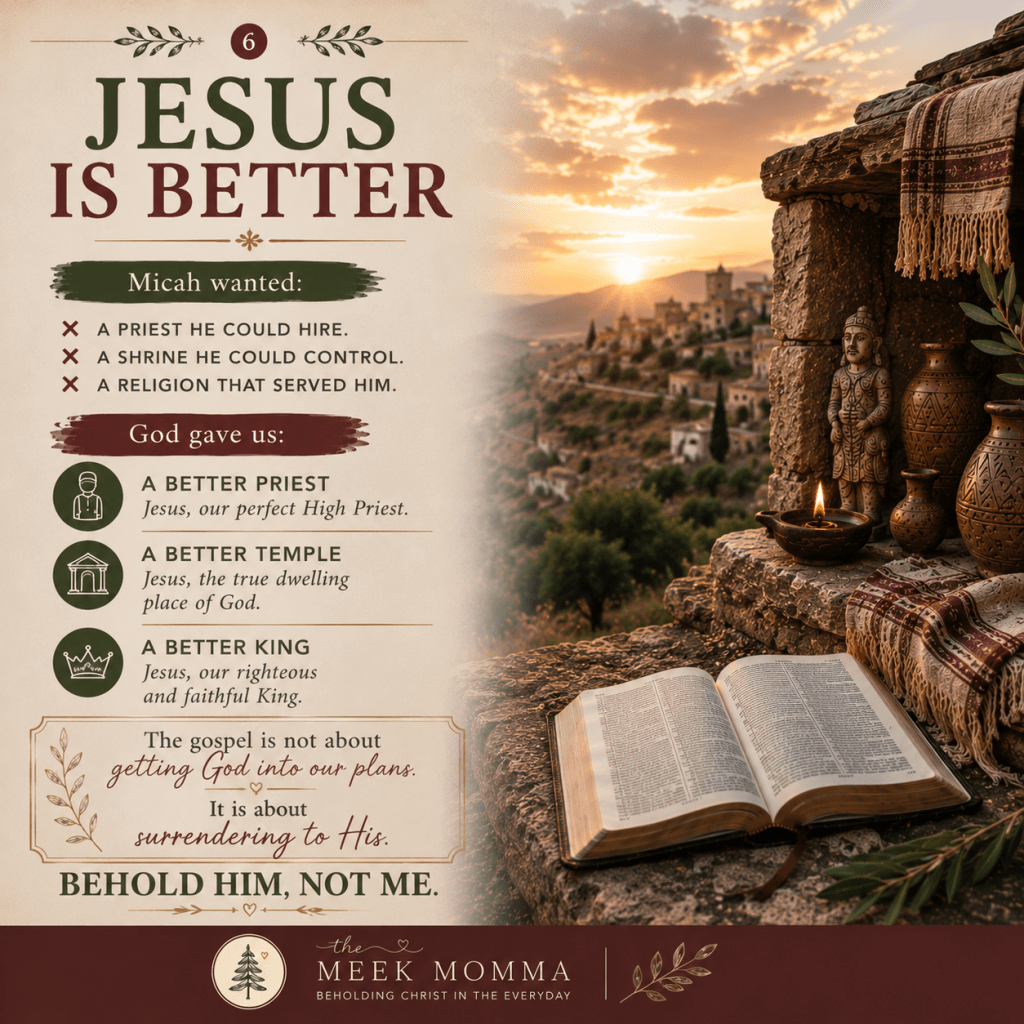
Micah wanted a priest who belonged to him.
A priest who would serve his interests.
A priest he could hire.
A priest he could control.
But God’s people do not need a priest of their own making.
We have been given a perfect High Priest.
The book of Hebrews tells us that Jesus Christ serves as our great High Priest before the Father.
Unlike Micah’s priest, Jesus cannot be bought.
Unlike Micah’s priest, Jesus never compromises.
Unlike Micah’s priest, Jesus perfectly represents God to His people and His people before God.
The wandering Levite points us toward humanity’s need for a faithful priest.
Jesus fulfills that need completely.
The Better Temple
Micah built a shrine.
God provided something better.
Throughout the Old Testament, God’s presence was associated with the tabernacle and later the temple.
But even these pointed beyond themselves.
Jesus declared:
“Destroy this temple, and in three days I will raise it up.” (John 2:19)
He was speaking about His own body.
Jesus is the true meeting place between God and humanity.
Micah attempted to create a sacred space that would guarantee God’s favor.
God gave us Christ.
We do not travel to a private shrine to find Him.
We come to Jesus.
The Better King
The repeated refrain of Judges reminds us:
“In those days there was no king in Israel. Everyone did what was right in his own eyes.”
Micah’s story illustrates exactly what happens when people become their own authority.
They reshape God.
They reshape worship.
They reshape truth.
They reshape morality.
They become kings of their own lives.
Yet the Bible’s answer is not better self-help.
The answer is a better King.
Jesus does not simply offer advice.
He reigns.
And unlike every human leader, His rule is good.
His commands are good.
His authority is good.
True freedom is not found in doing whatever seems right in our own eyes.
True freedom is found in joyful submission to the King who sees clearly.
Behold Him, Not Me
Micah’s religion looked impressive.
He had all the right pieces.
A shrine.
A priest.
Religious language.
Religious activity.
Religious confidence.
Yet none of it brought him closer to God because it was ultimately centered on himself.
The danger of Judges 17 is not merely false religion.
It is self-centered religion.
A faith that uses God rather than worships Him.
A faith that seeks blessings without surrender.
A faith that wants God’s gifts more than God Himself.
The gospel offers something infinitely better.
Not a convenient religion.
Not a customized spirituality.
Not a God made in our image.
But Jesus Christ.
Our better Priest.
Our better Temple.
Our better King.
The One who does not exist to serve our preferences.
The One who came to rescue us from ourselves.
May we learn to stop asking how God can fit into our plans.
And instead ask how our lives can be shaped by His.
Behold Him, not me.
Heart Check
• Are there areas where I want God’s blessings more than God’s authority?
• Have I been treating faith as a relationship or as a transaction?
• Do I approach God seeking surrender or control?
• Are there parts of my life I have customized according to my preferences rather than God’s Word?
• What would joyful submission to Christ look like in my life today?
Prayer
Father,
Forgive me for the ways I seek Your blessings while resisting Your authority. Forgive me for the times I have approached faith as a transaction rather than a relationship.
Thank You for giving me something far better than self-made religion. Thank You for Jesus, my perfect High Priest, my true Temple, and my rightful King.
Teach me to surrender areas of my life that I have kept under my own control. Help me to trust Your wisdom more than my preferences and Your Word more than my feelings.
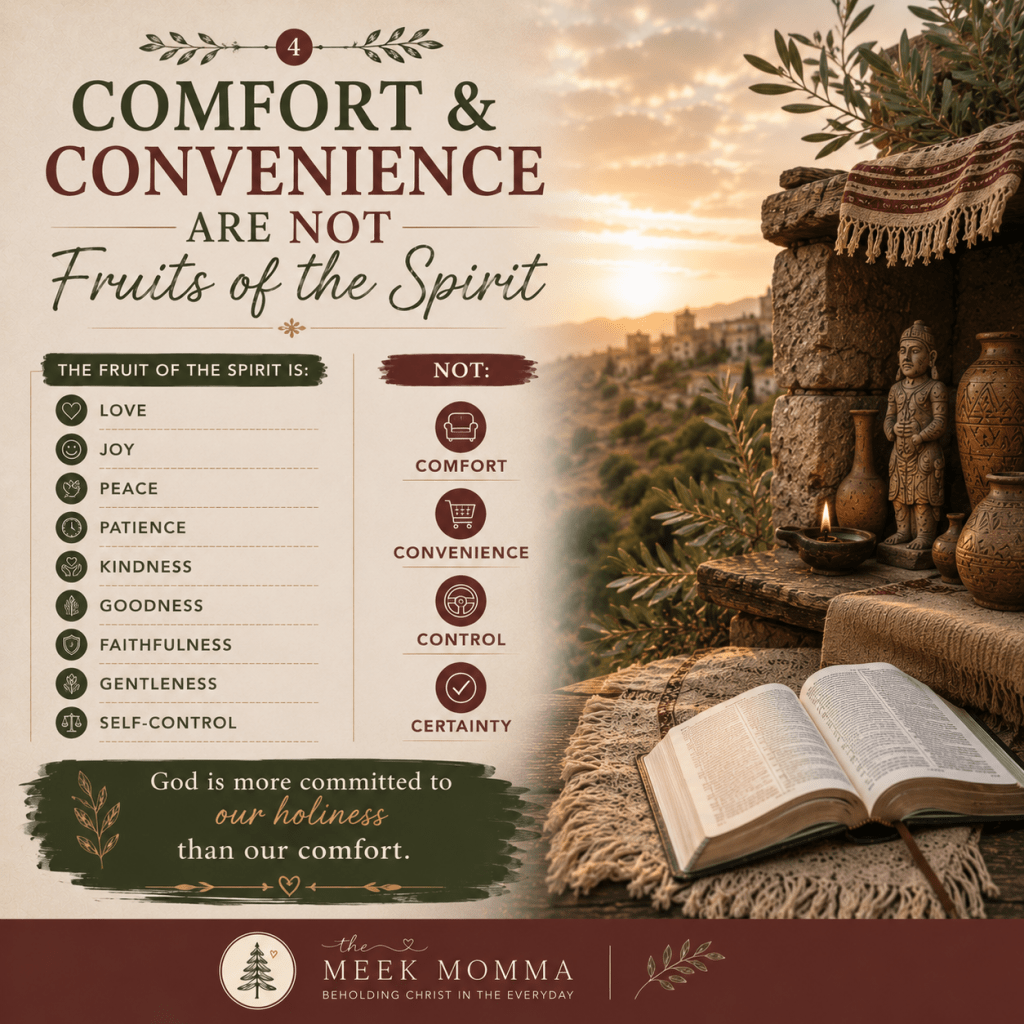
May my faith not be built around convenience, comfort, or personal gain, but around knowing and worshiping You.
Teach me to behold Christ more clearly and to follow Him more faithfully.
In Jesus’ name,
Amen.


Leave a Reply