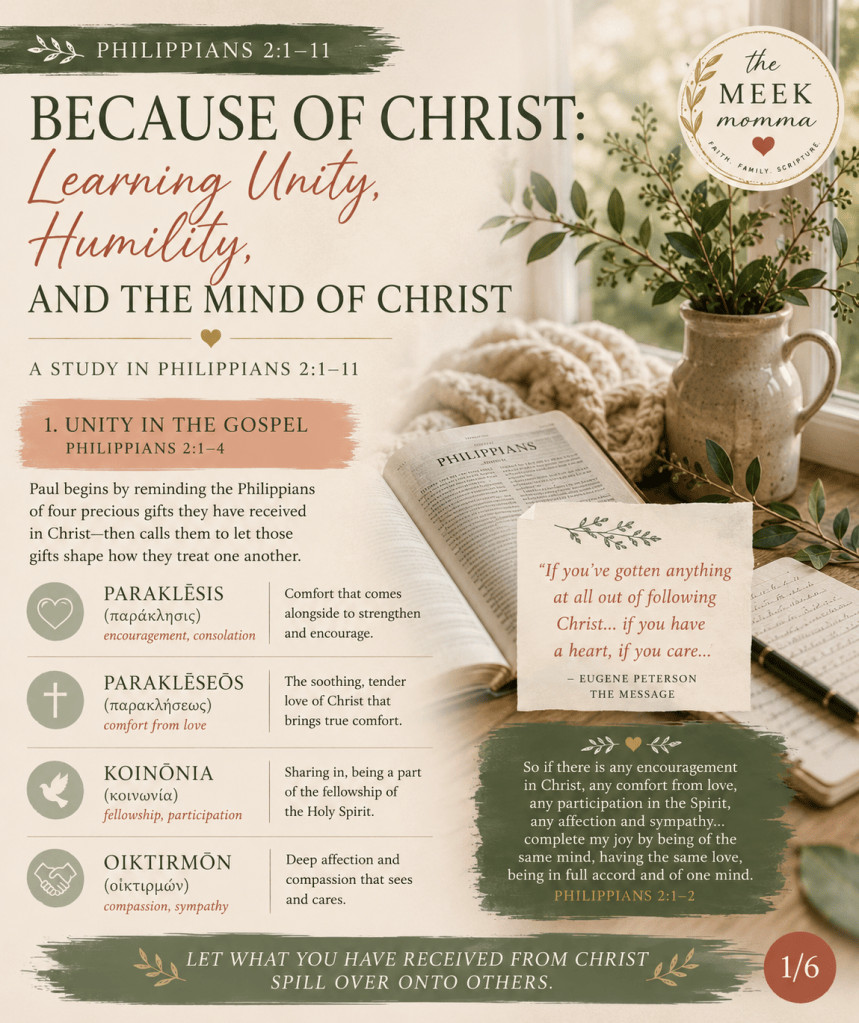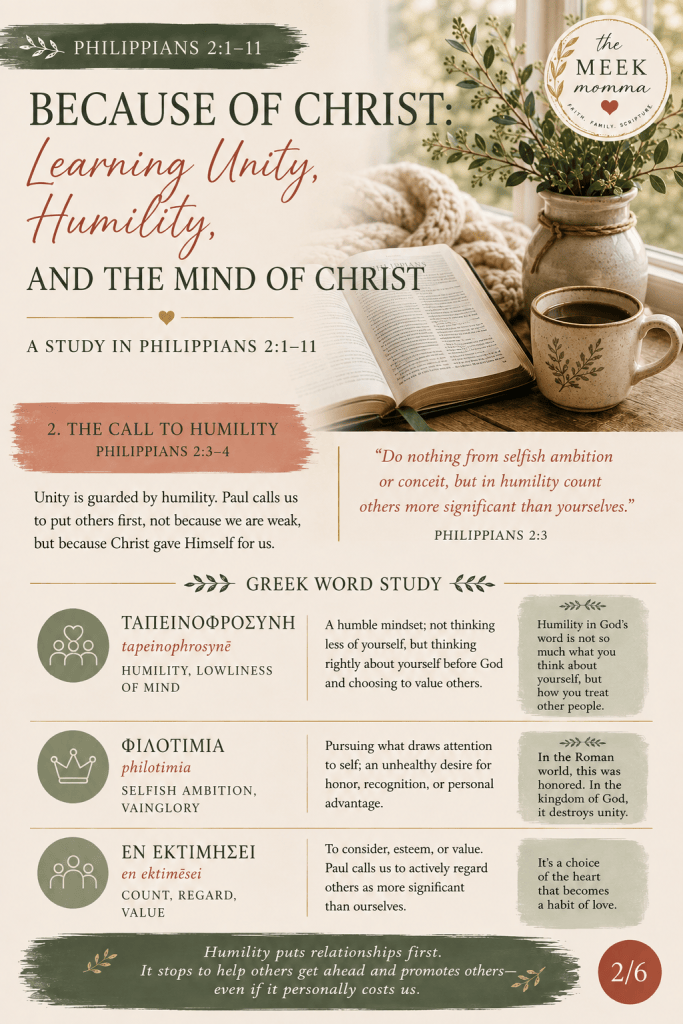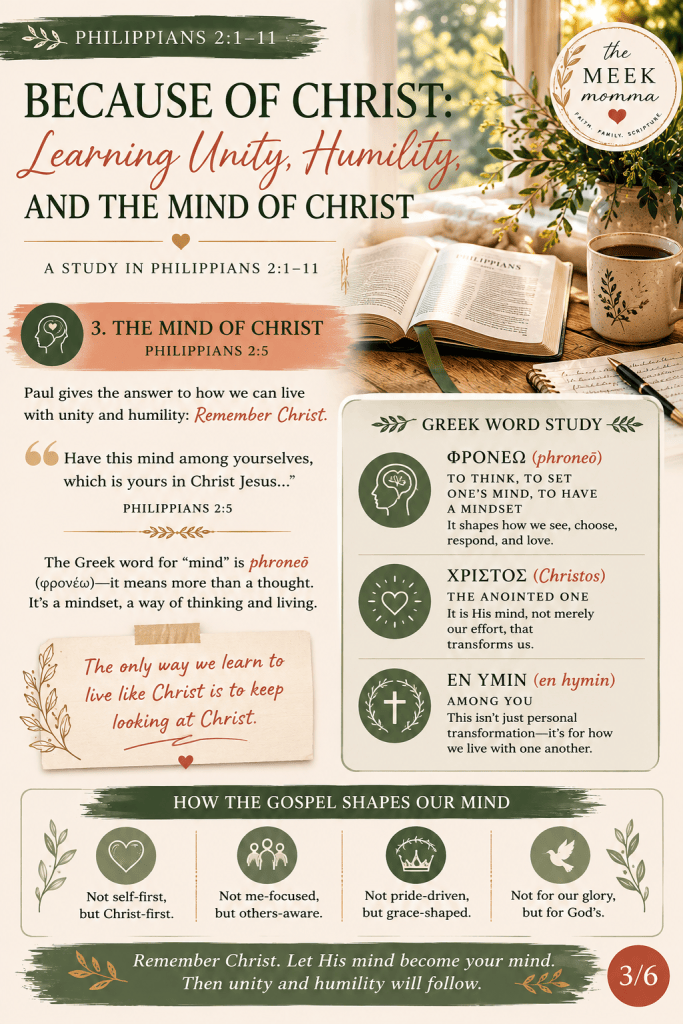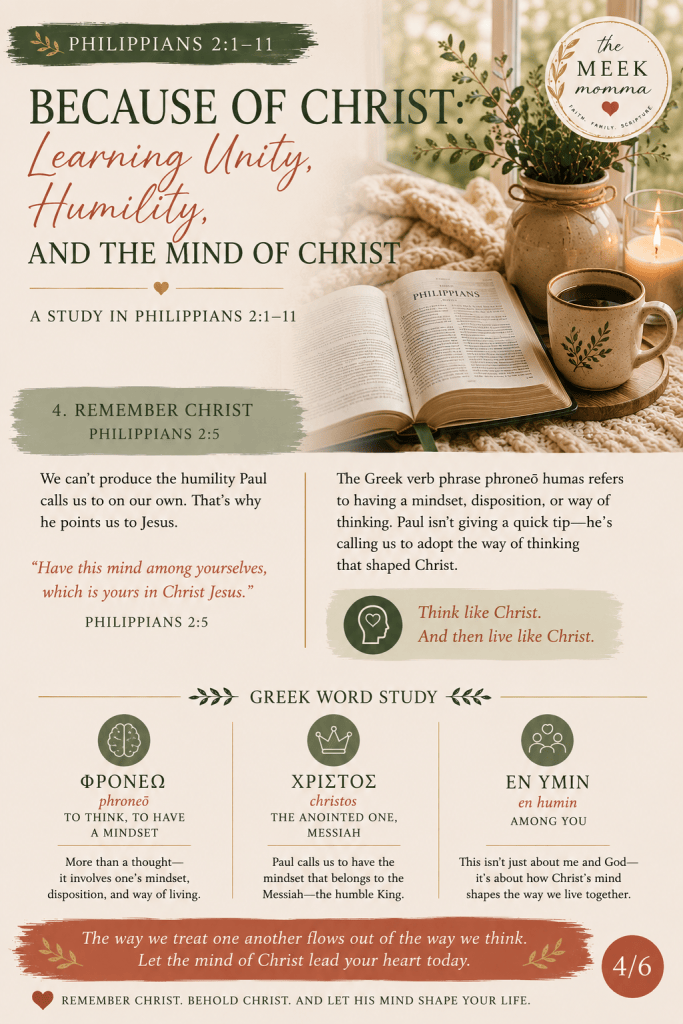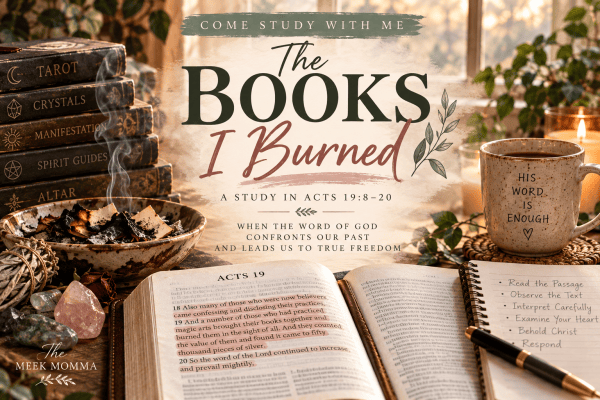
Come Study With Me: Acts 19:8–20
There are passages of Scripture that we read and appreciate, and then there are passages that seem to reach across the pages of the Bible and meet us right where we are.
Acts 19:18–20 is one of those passages for me.
I have read the account of the people in Ephesus who practiced magic and then brought their scrolls together and burned them, but the older I get in my faith, the more I understand why Luke included this detail. These people didn’t simply hear Paul preach, agree with what he said, and then continue living exactly as they had before. The Word of God confronted something in their lives, and their response was to repent and remove the things that belonged to their old way of life.
Luke writes:
“Also many of those who were now believers came confessing and disclosing their practices. And a number of those who had practiced magic arts brought their books together and burned them in the sight of all. And they counted the value of them and found it came to fifty thousand pieces of silver. So the word of the Lord continued to increase and prevail mightily.”
— Acts 19:18–20
For a long time, I thought I understood what it meant to believe in Jesus.
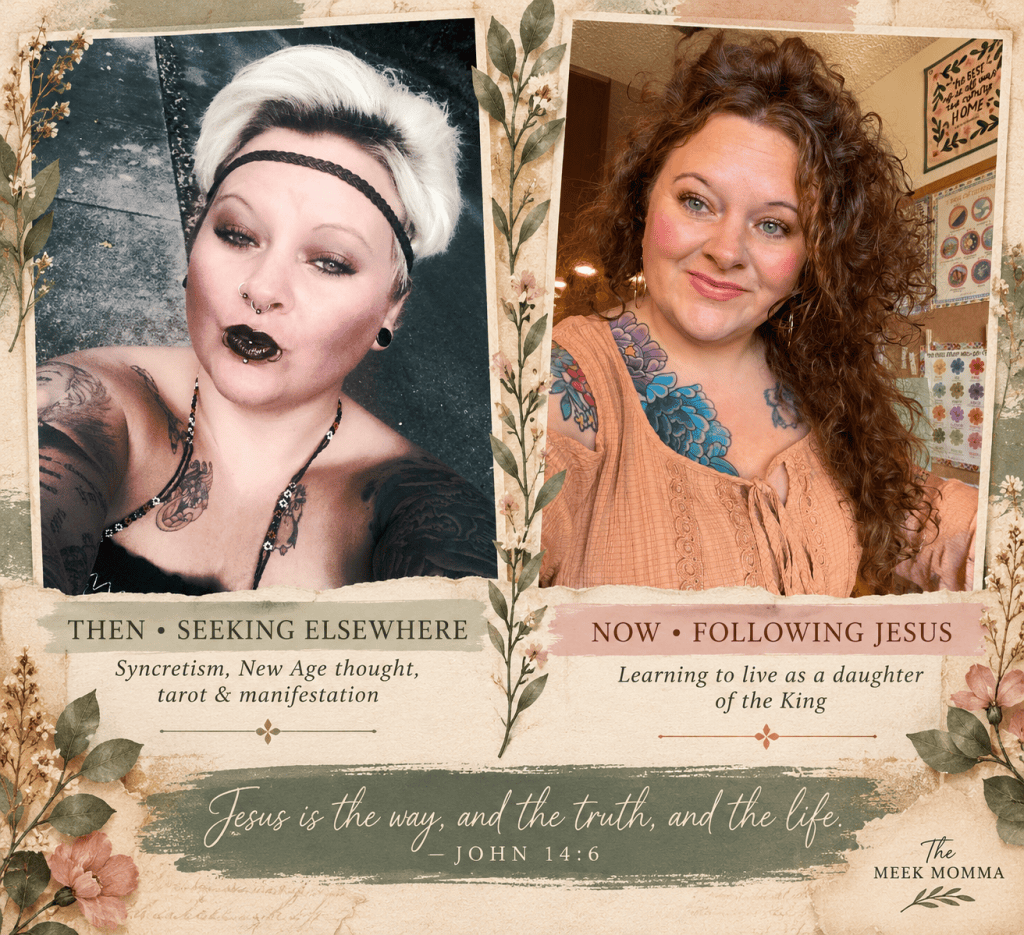
I believed in God. I believed Jesus was real. I would have told you that I was a Christian. But looking back, I can see that my understanding of Christianity was mixed with many other things. I was practicing what I now understand as syncretism: taking pieces of Christianity and combining them with other spiritual practices that I believed could give me knowledge, protection, power, guidance, or access to something beyond what I could see.
I didn’t understand at the time that these things were incompatible with following Christ.
I grew up knowing that the spiritual realm was real. There were things I experienced and witnessed in my childhood that I could not explain, and because of those experiences, I never really struggled with the idea that there was more to this world than what we can see. The problem was that I didn’t have a biblical framework for understanding any of it.
I knew there was a spiritual world, but I didn’t understand that Scripture teaches us to distinguish between what comes from God and what does not.
So I began looking in places I should never have looked.
There were crystals, stones, and gems that I believed carried energy or could help with manifestation. I had tarot cards that I used to look for answers about the future or ask questions and seek guidance from spirits. At one point I had an altar where I kept things that I associated with spiritual power, including parts of dead animals. During a particularly dark period of my life when I was struggling with self-harm, I even used my own blood on that altar while asking for particular things to happen to people who had hurt me.
I don’t share those details because I want to make the darkness sound interesting. I actually want to do the opposite.
I want to be careful about how we talk about these things because our culture has become very comfortable with spiritual practices that Scripture tells us to take seriously. What is sometimes presented as harmless, aesthetic, empowering, or even entertaining can become spiritually significant without us recognizing what we are participating in.
My story isn’t meant to make anyone curious about those things.
It is meant to show what happened when I finally began looking at them through the lens of Scripture.
When I Came Back to Church
When I came back to church as an adult, something began to change in me that I didn’t fully understand at first.
I started sitting under the preaching and teaching of God’s Word in a way I never really had before. I wasn’t simply hearing encouraging messages. I was beginning to encounter Scripture as God’s Word, with the authority to tell me what was true, what was false, what was holy, what was sinful, and what needed to change in my life.
The more I listened, the more I began to see things differently.
I had spent years believing that I could have Jesus and still hold onto these other spiritual practices. I thought I could believe in God while also looking to crystals for energy, tarot for answers, manifestation for outcomes, and spiritual experiences for guidance.
But Scripture doesn’t present Jesus as one spiritual option among many.
Jesus is Lord.
One of the passages that helped me understand this was Deuteronomy 18, where God specifically warned His people against practices such as divination, sorcery, interpreting omens, witchcraft, mediums, and consulting the dead. God wasn’t giving Israel a list of strange things they should be afraid of. He was teaching them where they were to look for guidance and where they were not.
The issue wasn’t whether there was a spiritual realm.
The issue was who God had told His people to trust.
Isaiah says something similar:
“And when they say to you, ‘Inquire of the mediums and the necromancers who chirp and mutter,’ should not a people inquire of their God?”
— Isaiah 8:19
That question is incredibly important.
Should not a people inquire of their God?
I began realizing that I had been looking for answers in places where God had never told me to look.
The Night I Cleaned Out My Closets
Eventually, the conviction became impossible for me to ignore.
I remember one night going through my closets and gathering these things up. It was the middle of the night, and I began pulling out the things I had accumulated over the years.
I threw them away.
Some of these things had cost me real money. They weren’t insignificant possessions that I had no attachment to. They were things I had intentionally purchased and kept because I believed they had some kind of spiritual significance.
But by that point, the question in my mind was no longer, “Do these things really work?”
The question was, “Do these things belong in a life surrendered to Jesus?”
And I knew the answer.
My husband was in complete shock.
We had argued about some of these things over the years. Eventually, he had essentially taken the position of agreeing to disagree with me. He knew how strongly I felt about them, and I knew how strongly he felt differently.
So when he saw me gathering everything up and getting rid of it, he couldn’t believe what he was seeing.
I remember telling him that I felt convicted by the Lord and that I needed to listen to the Spirit.
I didn’t have a perfectly developed theology of everything that was happening in that moment. I didn’t have all the answers. But I had begun to understand something that I hadn’t understood before:
If I belonged to Christ, I could not continue treating every spiritual practice as though it was compatible with Him.
So I got rid of it.
And I have never looked back.
The People in Ephesus
This is why Acts 19 means so much to me.
When Paul came to Ephesus, he reasoned with people from the Scriptures and taught them about the kingdom of God. The chapter tells us that his ministry continued for an extended period of time, and that God was doing extraordinary things through him.
There was also a dramatic confrontation involving some men who attempted to use the name of Jesus without actually belonging to Him. Their encounter exposed something important: the name of Jesus isn’t a spiritual formula that we manipulate to get power. Jesus is Lord, and His authority cannot be separated from relationship with Him.
And then we come to verses 18–20.
Many who had believed came confessing what they had been doing. Those who had practiced magic brought their scrolls together and burned them publicly.
I love that Luke tells us what those scrolls were worth.
Fifty thousand pieces of silver.
Whatever the exact modern equivalent, Luke wants us to understand that this was not a meaningless sacrifice. These were valuable possessions.
They didn’t say, “Well, these cost a lot, so I’ll keep them even though I don’t use them.”
They didn’t put them in a box in the attic.
They didn’t keep them around as a reminder of their past.
They burned them.
And I think there is something we need to understand about biblical repentance here.
Repentance is more than feeling bad about something.
It is more than admitting that something was wrong.
Repentance means turning.
Sometimes that turning requires us to make very practical changes in our lives.
For those believers in Ephesus, repentance meant getting rid of the things associated with their former practices. For me, it meant going through my closets in the middle of the night and throwing away the things I had once considered spiritually meaningful.
The objects weren’t the source of my salvation or the proof that I had truly repented. Christ was my salvation.
But getting rid of those things was one tangible expression of what God was doing in my heart.
I Didn’t Become Afraid of the Spiritual Realm
One of the things I want to make clear about my story is that I didn’t come away from this thinking that the spiritual realm wasn’t real.
Quite the opposite.
I already knew it was real.
What changed was the lens through which I understood it.
Before Christ became central in my life, I had treated the spiritual realm almost like a marketplace. There were good things and bad things, different kinds of spiritual power, different ways to gain knowledge, different sources of guidance, and different practices I could use depending on what I wanted.
But Scripture gave me a completely different framework.
There is one God.
He is Creator.
I am His creature.
Jesus Christ is Lord.
And I don’t need to search the spiritual world for power, knowledge, protection, identity, or guidance because God has already told me where to go.
His Word.
His presence.
His wisdom.
His people.
And ultimately, Christ Himself.
I don’t want my testimony to make people fascinated with the things I used to practice. I don’t want to describe my past in a way that makes darkness sound mysterious or powerful or exciting.
I want women to learn to look at the world through the lens of Scripture.
Because the spiritual danger isn’t only found in obvious things.
Sometimes it is hidden beneath something beautiful.
Sometimes it is packaged as self-care.
Sometimes it is called manifestation.
Sometimes it is entertainment.
Sometimes it is presented as harmless curiosity.
And sometimes we don’t recognize what we are participating in because we have never opened our Bibles and learned what God actually says about it.
What About the Things We Let Enter Our Homes?
This is where I think Acts 19 begins to challenge all of us.
We can read about the people of Ephesus and think, “Well, I don’t practice magic, so this doesn’t really apply to me.”
But Scripture asks us to examine our hearts much more deeply than that.
What sources do I look to for guidance?
What do I believe will give me power or control?
Where do I go when I am afraid?
What am I trusting to protect me?
What do I believe will tell me what is going to happen?
What practices have I allowed into my life because they seemed harmless?
What entertainment has slowly taught me to become comfortable with things God calls us to reject?
What have I kept because it has sentimental value even though I know it doesn’t belong in my life with Christ?
These are questions meant to make us discerning.
Paul tells the believers in Corinth that they cannot have fellowship with the Lord while participating in what belongs to idolatry. Scripture consistently calls God’s people to distinguish between what belongs to Him and what does not.
That doesn’t mean Christians should live terrified of everything around them.
It means we should live with our eyes open.
We don’t need to become fascinated with darkness in order to recognize it.
We need to know the light.
When the Word Confronts Us
One of the things I love about Acts 19 is that the people weren’t simply given a list of rules.
They encountered the Word of God.
And when the Word confronted them, they responded.
That is what happened to me.
I didn’t wake up one morning and decide that I needed to completely change my spiritual worldview because I had become particularly disciplined or wise.
God used His Word.
He allowed me to sit under preaching and teaching, and slowly I began to see what I hadn’t seen before.
That is why I have become so passionate about studying Scripture.
The Bible doesn’t simply give us information about God.
It teaches us how to see everything else.
It gives us a framework for understanding ourselves, the world around us, suffering, temptation, sin, relationships, culture, our bodies, our families, and even the unseen spiritual realities that Scripture tells us exist.
The more we know God’s Word, the less dependent we become on our own feelings and experiences to determine what is true.
And that matters because my experiences were real to me, but my experiences could not be my authority.
Scripture had to be.
Behold Christ
This is where I want us to end, because the point of Acts 19 isn’t really the books.
It is Jesus.
The people of Ephesus weren’t saved because they burned their scrolls. They burned their scrolls because they had come to believe in Christ and their allegiance to Him changed what they were willing to keep.
Christianity isn’t primarily about cleaning up our lives so that we can become acceptable to God.
It is about being reconciled to God through Jesus Christ and then allowing His lordship to change everything.
There were many things I needed to leave behind when I came to Christ.
But what I gained was infinitely greater.
I didn’t lose access to spiritual power.
I found the One who has all authority.
I didn’t lose the ability to seek answers.
I found the One who is Truth.
I didn’t lose protection.
I found the One who is my refuge.
I didn’t lose my connection to the spiritual world.
I found the God who created both the seen and the unseen and who has authority over them all.
And that is why Acts 19:20 is such a beautiful ending to this story:
“So the word of the Lord continued to increase and prevail mightily.”
The books were burned.
But the Word remained.
And the Word prevailed.
Maybe your story looks nothing like mine.
Maybe you have never owned tarot cards or crystals. Maybe you have never participated in anything you would have called occult or spiritual.
But I would still encourage you to sit with Acts 19 for a while.
Ask the Lord to search your heart.
Are there things you have been trying to hold alongside Christ?
Are there places you are looking for guidance that God has not given you permission to look?
Are there practices you have accepted because our culture has made them seem harmless?
Are there things in your home, your entertainment, your habits, or your thinking that the Holy Spirit has been bringing to your attention?
And if He does bring something to mind, don’t respond with shame.
Respond with repentance.
You don’t have to be fascinated with what you are leaving behind.
You don’t have to understand every detail of it.
You don’t have to become an expert on darkness.
You simply need to know Christ and trust His Word.
There was a night when I went through my closets and threw away things that I once believed were spiritually meaningful.
I didn’t know then that years later I would look back on that night and see Acts 19 in it.
But now I do.
And I am grateful that the Lord loved me enough to let His Word confront me.
Because the greatest thing that happened wasn’t that I threw away some books, cards, stones, or objects.
The greatest thing that happened was that I began to understand that Jesus was not meant to be one part of my spirituality.
He was calling me to Himself.
Come Study With Me
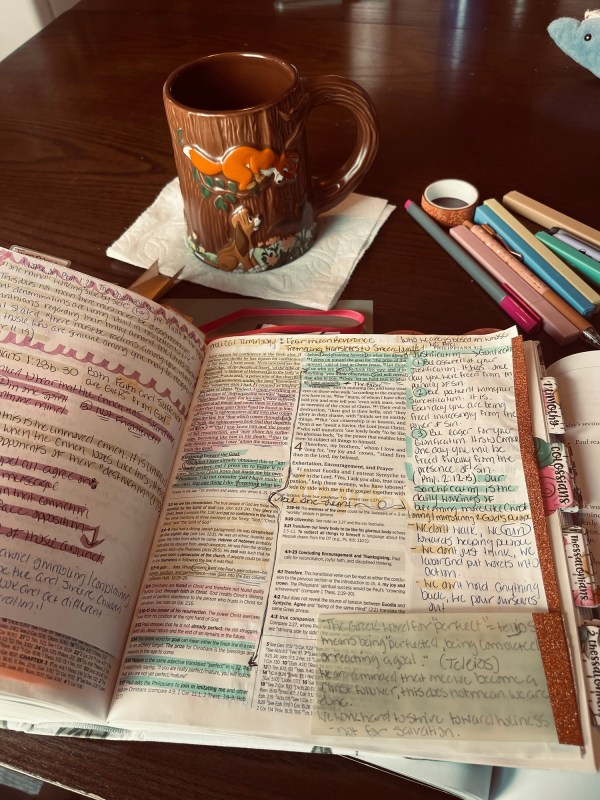
Read: Acts 19:8–20
Study: Deuteronomy 18:9–14; Isaiah 8:19–20; 1 Corinthians 10:20–21
Ask: What does this passage teach me about repentance? What does it reveal about where I seek guidance and authority?
Examine: Is there anything I am attempting to hold alongside Christ?
Behold: Jesus is Lord over both the seen and unseen.
Respond: Repent where God convicts, remove what needs to be removed, and trust Christ completely.