What Are We Building, and Will It Matter?

A Reflection on Wisdom, Repentance, and Living Before Christ

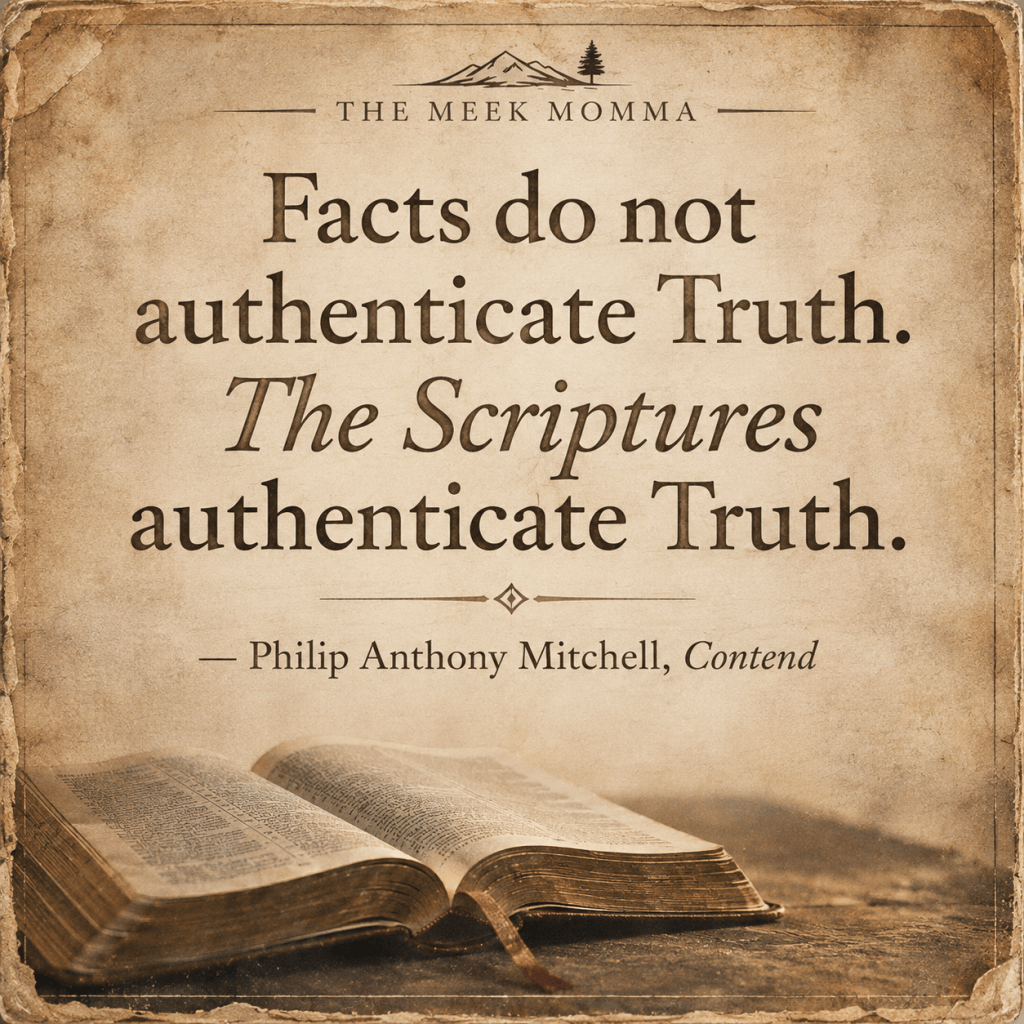
I’ve been reading Contend by Philip Anthony Mitchell, and several passages have brought me back to something the Lord has been impressing upon my heart through my own study of Scripture, writing, and teaching over these last several months.

At our Mom Fight Club retreat, we spent time in Proverbs 14:1, considering the woman who builds her house through wisdom and the woman who tears it down through folly. We talked about how wisdom is not simply knowing what is right, but living in reverence and obedience to the Lord. How the things we do quietly, consistently, and sometimes without anyone noticing are shaping our homes and our lives.

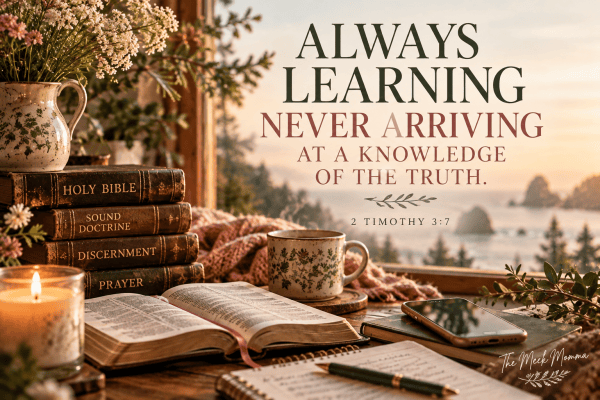
I’ve also been thinking about Paul’s warning in 2 Timothy 3 concerning those who are “always learning and never able to arrive at a knowledge of the truth” (verse 7).

What a sobering description of something we can recognize in our own generation.

We have access to more sermons, podcasts, Bible studies, teachers, books, and Christian content than we could possibly consume in a lifetime. Yet access to biblical information is not the same thing as spiritual maturity. We can know what everyone is saying about God while spending very little time actually listening to what God has said in His Word.

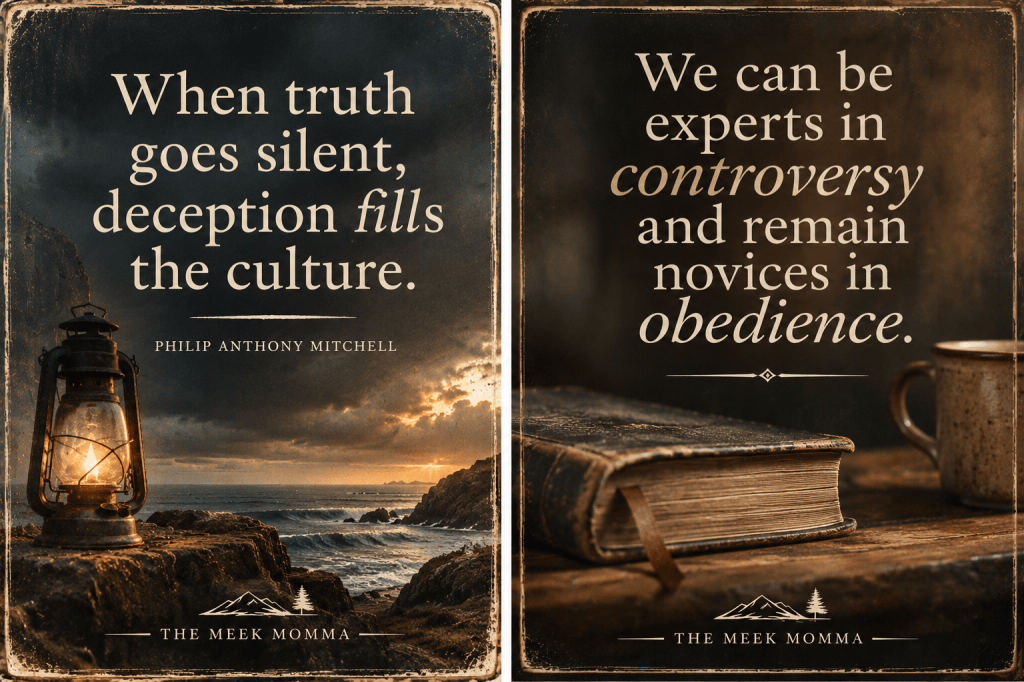
We can become experts in controversy and remain novices in obedience.

And perhaps most concerning, we can become so preoccupied with the sins of the world, the failures of church leaders, and the deception we see around us that we neglect to examine the condition of our own hearts.
In Jude 3, believers are urged to contend for the faith once delivered to the saints. That is a necessary charge. Truth matters. Doctrine matters. We are not free to reshape Christianity around our preferences, feelings, or the changing convictions of the culture.

But contending for the faith must never become a substitute for actually living the faith.

Jude doesn’t merely warn against false teachers. He goes on to instruct believers to build themselves up in the faith, pray in the Holy Spirit, keep themselves in the love of God, and wait for the mercy of Jesus Christ (Jude 20–21).

Notice how much of that instruction requires our own faithful participation.

And this brings me back to Proverbs 14:1.

What are we building?

What are we allowing to shape our thinking, our affections, our conversations, and our homes? What are we teaching our children about what matters, not merely through the things we tell them, but through the things they watch us pursue?

Are we becoming more patient? More humble? More generous? More acquainted with Scripture? More willing to confess our sins and turn from them?

Or are we simply becoming more informed, more opinionated, more distracted, and more comfortable with the things God has called us to put away?

I ask these questions of myself as much as anyone else.

Because repentance is not merely the doorway through which we entered the Christian life. It ought to remain an ongoing posture of the Christian heart.

Not because Christ’s sacrifice was insufficient, but because His grace is continually teaching us to renounce ungodliness and live godly lives (Titus 2:11–12).

We should be growing in our willingness to be corrected by Scripture. We should be quicker to recognize our own sin, quicker to confess it, and increasingly unwilling to make peace with the things that grieve the Lord.
And we should never confuse repentance with despair. The Christian does not turn from sin toward hopelessness. We turn toward Christ, whose mercy is sufficient and whose grace continues to transform us.

Lately, I’ve been thinking more about the judgment seat of Christ.

Paul writes in 2 Corinthians 5:9–10 that his aim is to please the Lord, because we must all appear before the judgment seat of Christ and give account for what we have done in the body.

One day, we will stand before Him.

And I wonder how much of what consumes us today will seem terribly insignificant in that moment.

The arguments we felt compelled to win. The opinions we needed everyone to hear. The endless hours spent consuming information that did little to make us more faithful. The comforts we protected, the distractions we justified, and the opportunities to love and serve that we allowed to pass us by.

How differently might we live today if we remembered that our lives are being lived before the Lord?

Not every faithful act will be impressive to the world. Much of it may look like ordinary obedience. Loving our families. Speaking truth graciously. Repenting when we are wrong. Praying when no one sees. Refusing to compromise. Opening our Bibles when something else would be easier. Serving faithfully in the places God has assigned to us.

These things matter.

And none of this is about earning our standing before God. Our salvation rests entirely upon the finished work of Jesus Christ. But the grace that saves us is also the grace that changes us.

I don’t want to spend my life collecting Christian knowledge while resisting the very transformation that knowledge ought to produce.

I don’t want to be so busy identifying the foolishness around me that I fail to recognize the foolishness I am allowing into my own home.

And I certainly don’t want to stand before Christ having devoted more attention to the temporary things of this world than to the eternal things He entrusted to me.

Psalm 1 describes the blessed person as one who delights in the instruction of the Lord and meditates on it day and night. That person is compared to a tree planted by streams of water, bearing fruit in its season.

There is something encouraging about that picture.

The tree does not produce fruit by chasing every passing thing. It bears fruit because it is rooted, nourished, and sustained.

Perhaps that is where we need to return.

Not to another personality, another controversy, or another endless stream of content, but to the Word of God. To prayer. To repentance. To the ordinary, often unseen work of faithfully following Jesus.

Are we allowing biblical truth to govern the way we actually live?

Because one day we will see our lives in the light of eternity, and I pray that what matters to Christ will have mattered to us.

May we be women who build wisely, repent readily, contend faithfully, and rest wholly in the grace of our Savior.

We do not need to wait until eternity to begin caring about the things that will matter in eternity.

“So whether we are at home or away, we make it our aim to please him.” — 2 Corinthians 5:9

The Meek Momma
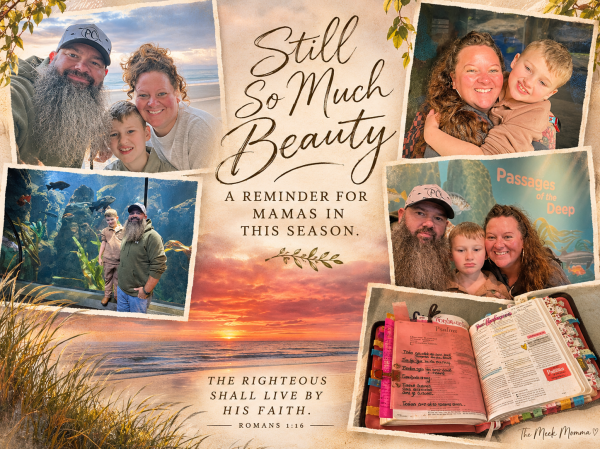
The Righteous Shall Live by Faith

Reflections on Election Morning

This morning, I woke up with a heavy heart as I considered the results of last night’s election. I’ve spent much of the morning praying, thinking about the condition of our nation, and returning to the Scriptures.

My disappointment isn’t simply about political parties or who won and who lost. My concern is much deeper than that. As Christians, we are called to examine what we value, what we approve of, and what we place our hope in. We ought to be asking whether our convictions are being shaped by the Word of God or by the desires of our flesh, our pursuit of comfort, our love of money, and the things this world promises us.

And that examination must begin with ourselves.

Paul writes in Romans 1:16–17:

“For I am not ashamed of the gospel, for it is the power of God for salvation to everyone who believes, to the Jew first and also to the Greek. For in it the righteousness of God is revealed from faith for faith, as it is written, ‘The righteous shall live by faith.’”

Paul continues in Romans 1:18–32 by describing humanity’s rejection of God. Although God has made Himself known through creation, sinful humanity has exchanged the truth about God for a lie, worshiping and serving the creature rather than the Creator.

What a sobering description of the human heart.

We are so prone to elevate created things into places of ultimate importance. Power, prosperity, security, comfort, approval, and even our political convictions can become idols when we allow them to occupy the place that belongs to God alone.

But Romans doesn’t leave us merely examining the sins of the world around us. Paul goes on to establish that all have sinned and fall short of the glory of God (Romans 3:23). None of us stands righteous before God on our own merit. Yet Romans 3:24 reminds us that sinners can be justified by His grace as a gift, through the redemption that is in Christ Jesus.

That is the gospel. And that is where our hope must remain.

Something else has been on my heart this morning as I think about the women I’ve been teaching and the passages of Scripture we’ve been studying together.

When Paul writes, “The righteous shall live by faith,” he is quoting Habakkuk 2:4.

Habakkuk was a prophet who looked around at the wickedness, injustice, and violence of his own day and cried out to the Lord. He struggled to understand what God was doing and why He seemed to allow evil to continue.

Doesn’t that sound familiar?

But what I find so beautiful about Habakkuk is that he doesn’t abandon the Lord in his confusion. Instead, he positions himself to watch and wait.

“I will take my stand at my watchpost and station myself on the tower, and look out to see what he will say to me.”
— Habakkuk 2:1

In the ancient world, watchmen stood upon city walls, looking for approaching danger or messengers. Habakkuk uses this imagery to describe his posture before God. He doesn’t have all the answers, but he is determined to wait upon the Lord.

And God’s answer includes this remarkable declaration:

“But the righteous shall live by his faith.”
— Habakkuk 2:4

Faith does not mean having every answer. It does not require circumstances to change before we trust God. It means trusting His character, His promises, and His purposes even when the outcome is not yet visible.

By the end of Habakkuk’s book, his circumstances have not suddenly become easy. Yet he declares that even if the fig tree should not blossom, the fields yield no food, and the flocks disappear, he will rejoice in the Lord and take joy in the God of his salvation (Habakkuk 3:17–19).

What a beautiful picture of faith in the in-between.

This is what I want to remember this morning.

My joy cannot depend upon election results, political leadership, financial security, or the direction of our culture. If it does, my peace will always be as unstable as my circumstances.

But Christ is not unstable. His throne is not threatened. His promises have not changed, and His return is certain.

So yes, I am grieved. I am praying for repentance, for revival, and for hearts to turn back to the living God. I am praying that the Church would be faithful to His Word, unwilling to exchange truth for comfort or compromise for acceptance.

But I am also reminded that our calling has not changed.

We are still called to proclaim the gospel, love our neighbors, pursue righteousness, speak truth, repent of our own sins, and live by faith.

Our hope was never supposed to rest in the outcome of an election. It rests in the risen and returning Christ.

So my prayer today echoes the words of King Jehoshaphat in 2 Chronicles 20:12:

“We do not know what to do, but our eyes are on you.”

Lord, may our eyes remain fixed upon You. Bring us to repentance. Revive Your Church. Teach us to be faithful in the waiting, steadfast in truth, and joyful in Your salvation.

For the righteous shall live by faith.

The Meek Momma

“Always learning and never able to arrive at a knowledge of the truth.”— 2 Timothy 3:7

There is a warning here for us.

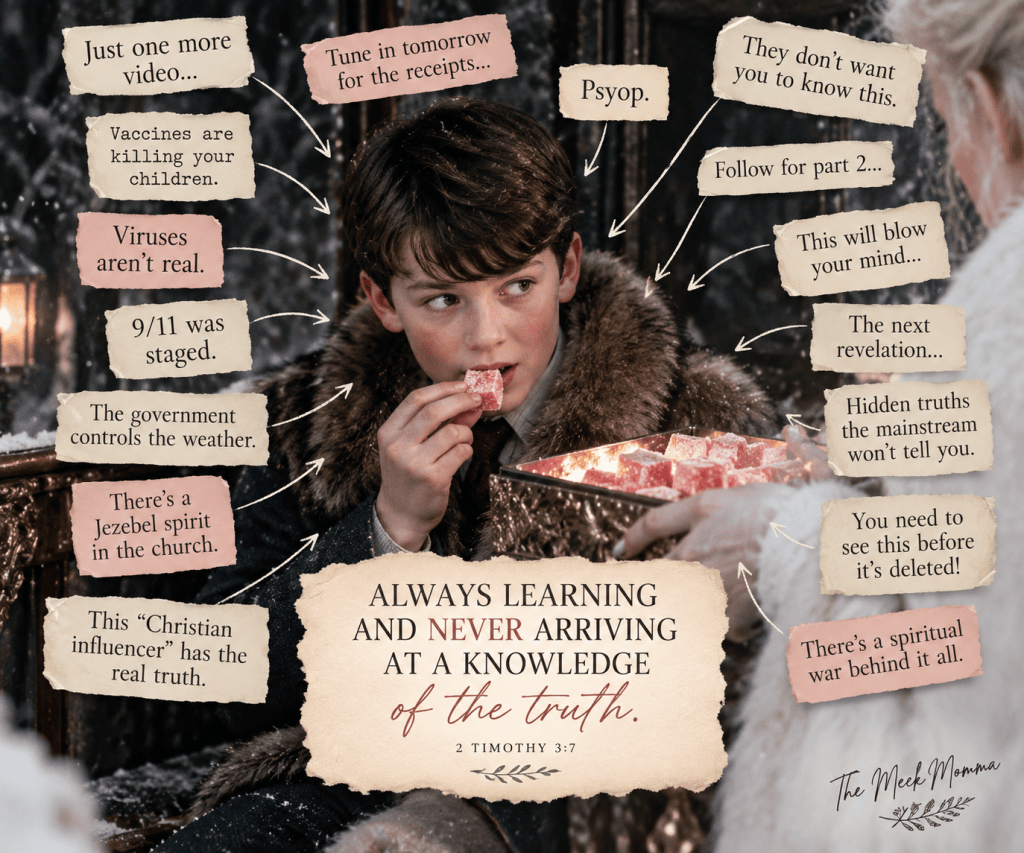
We are living in an age where women can spend hours scrolling, listening, watching, speculating, gossiping, following personalities, chasing conspiracy theories, consuming controversy, and endlessly learning about everything—while becoming increasingly unfamiliar with the Word of God.

We can have access to more information than any generation before us and yet be increasingly starved of truth.

Paul warns Timothy:

“For among them are those who creep into households and capture weak women, burdened with sins and led astray by various passions, always learning and never able to arrive at a knowledge of the truth.”
— 2 Timothy 3:6–7

Notice that Paul doesn’t merely warn about false information.

He warns about captivation.

There are voices that want access to your attention.
There are voices that want access to your home.
There are voices that want access to your children.
There are voices that want access to your emotions.
And there are voices that will gladly keep you angry, afraid, suspicious, entertained, and distracted because a distracted Christian is easier to influence.

And Christian women, we need to be careful.

Not everything that calls itself “discernment” is discernment.

Not every secret explanation is truth.

Not every viral video deserves our attention.

Not every accusation deserves our agreement.

Not every Christian influencer deserves our trust.

Not every “dream,” “revelation,” or personal experience carries biblical authority.

And not every hour we spend consuming information is an hour well spent.

Jude gives us another sobering picture. He warns about people who reject authority, follow their own ungodly desires, boast about what they do not understand, and infiltrate the people of God. They are compared to hidden reefs—dangerous beneath the surface.

That is what makes this so serious.

Some dangers do not look dangerous at first.

They look like entertainment.

They look like “just keeping up.”

They look like being informed.

They look like exposing evil.

They look like having discernment.

They look like Christian content.

But if something continually produces fear, suspicion, outrage, gossip, arrogance, obsession, division, or contempt—and continually pulls you away from Scripture, prayer, your responsibilities, and loving Christ and His people—we should have enough discernment to step away.

Christian women, we need to be in the Word.

Not merely hearing what someone says the Bible says.

Not merely listening to sermons while scrolling through everything else.

Not merely collecting Bible studies.

We need to know the Word ourselves.

We need sound doctrine.

We need prayer.

We need self-control.

We need holy lives.

We need to learn how to recognize a counterfeit because we know what is true.

And husbands, fathers, pastors, and spiritual leaders—pay attention.

Pay attention to what is entering your home.

Pay attention to what voices are discipling your family.

Pay attention to what is filling the ears and hearts of those entrusted to your care.

This isn’t about controlling women.

It is about shepherding a household.

We should all be asking:

What is discipling me?

What am I consuming every day?

What occupies my thoughts?

What am I constantly talking about?

What am I teaching my children to care about?

Am I becoming more like Christ—or simply more informed about the things of this world?

Paul says that in the last days there will be people who are lovers of self, lovers of money, proud, arrogant, abusive, disobedient, ungrateful, unholy, heartless, slanderous, without self-control, brutal, treacherous, reckless, swollen with conceit, and lovers of pleasure rather than lovers of God.

And then he tells Timothy what to do.

Stay faithful.

Jude tells us:

“But you, beloved, building yourselves up in your most holy faith and praying in the Holy Spirit, keep yourselves in the love of God, waiting for the mercy of our Lord Jesus Christ that leads to eternal life.”
— Jude 20–21

There is our answer.

Grow strong in sound doctrine.
Preserve in prayer.
Keep yourselves in the love of God.
Wait for the coming of Christ.

We do not need to know every conspiracy.

We do not need to follow every controversy.

We do not need to have an opinion about everything.

We need to know Christ.

We need to know His Word.

We need to guard our homes.

We need to guard our hearts.

We need to live holy lives.

And we need to remember that our King is coming.

So, sister—

Put the phone down.
Open the Word.
Pray.
Test what you hear.
Guard your heart.
Love your family.
Walk in holiness.
And keep your eyes on Christ.

Because the goal isn’t to be the woman who knows everything happening in the world.

The goal is to be the woman who knows the One who made it.

“To the only God, our Savior, through Jesus Christ our Lord, be glory, majesty, dominion, and authority, before all time and now and forever. Amen.”
— Jude 25

Blog at WordPress.com.

Up ↑