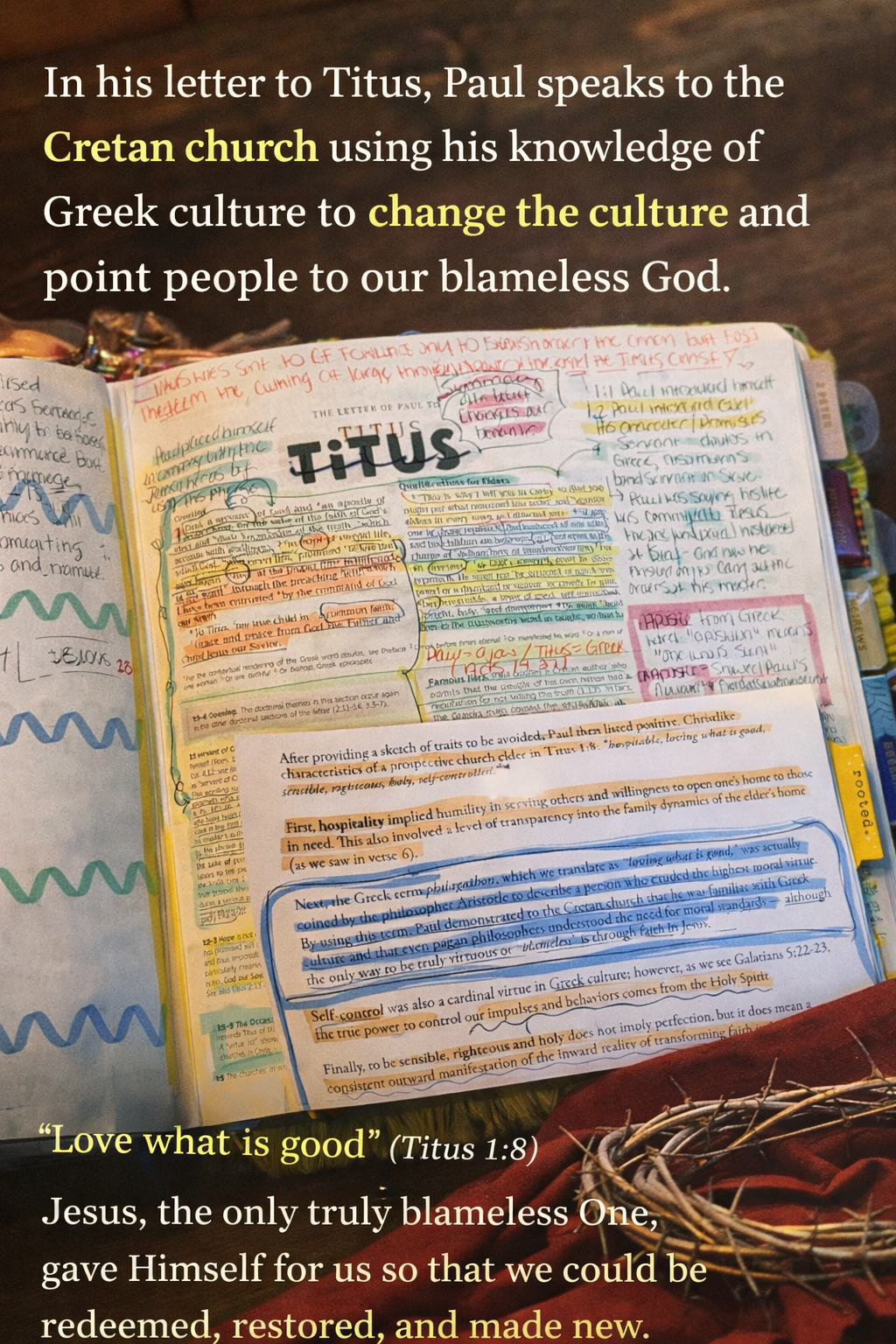
What’s incredible is how Paul engages the culture around him. He doesn’t ignore it—he understands it. When he calls believers to “love what is good,” he uses the Greek idea philagathon, a term familiar in their world and even used by philosophers like Aristotle to describe the highest moral virtue. Paul meets the Cretan people where they are, acknowledging that even their own thinkers recognized the need for goodness and moral standards—but then he points them to something greater: the only true source of blamelessness, Jesus Christ.
The same is true with self-control. Highly valued in Greek culture, yet ultimately unattainable in its fullness apart from God. As we see in Galatians 5:22–23, true self-control is not something we manufacture—it is fruit produced by the Holy Spirit within us.
To be sensible, righteous, and holy isn’t about perfection. It’s about a consistent outward life that reflects an inward transformation—a heart changed by faith in Jesus.
And this is where the beauty of Good Friday meets us. The call to live differently isn’t rooted in striving—it’s rooted in surrender. Jesus, the only truly blameless One, gave Himself for us so that we could be redeemed, restored, and made new.
This Good Friday, we remember: the gift is already given. Freedom is already offered. All that remains is to repent, believe, and receive the grace that changes everything.


 The Meek Momma
Leave a comment