The God Who Cares for His Creation

What Leviticus 22 reveals about the heart of God

As I have been reading through Leviticus, I have found myself thinking about something that may seem like an unlikely theme to pull from a book filled with sacrifices:

Godโ€™s heart for animals.

For some of us, the sacrificial system can be difficult to read.

If you have a tender heart toward animals, it can be uncomfortable to picture animal after animal being brought to the altar, its life given as part of Israelโ€™s worship.

But as I continued reading, I began to notice somethingโ€ฆ

The fact that God required animals to be used in Israelโ€™s sacrificial system does not mean that God did not value them.

Quite the opposite.

When we step back and look at the whole story of Scripture, we see a God who repeatedly demonstrates His care for His creation.


Even in the Garden

After Adam and Eve sinned, their shame became immediately apparent.

They recognized their nakedness and attempted to cover themselves.

But Genesis 3:21 tells us:

โ€œAnd the LORD God made for Adam and for his wife garments of skins and clothed them.โ€

This is the first recorded place where an animalโ€™s death is connected with covering the shame of humanity.

And what a sobering picture that is.

Sin brought death into the world, and creation would bear the consequences of humanityโ€™s rebellion.

The animal did nothing wrong. And yet humanityโ€™s sin affected the created order.

Romans 8 would later describe creation itself as groaning under the consequences of the Fall.

That means when we encounter animals dying in the sacrificial system, we should not necessarily see a God who is indifferent toward animal life.

We are seeing a world broken by sin.

And God is teaching His people something about the seriousness of sin, the cost of death, and the need for atonement.


God Put Boundaries Around the Sacrifice

Then we arrive at Leviticus.

And something caught my attention in Leviticus 22:27โ€“28.

God gives instructions concerning animals that are being brought for sacrifice.

The young animal was not to be offered until it had been with its mother for seven days.

And then God says:

โ€œWhether the cow or a ewe, you shall not kill it and its young in one day.โ€

Even within the sacrificial system, God established boundaries concerning how His people were to treat animals.

God wasnโ€™t simply saying, โ€œThese animals exist for you to use however you please.โ€

He was teaching Israel to recognize that life belongs to Him.

There was reverence even in the way an animal was handled.

There were limits and there was restraint.

There was a recognition that Godโ€™s people were stewards rather than owners in the ultimate sense.


God Remembered the Animals on the Ark

Think about Noah.

When God judged the world through the flood, He didnโ€™t simply preserve Noah and his family.

He preserved the animals.

Genesis 8 tells us that Noah eventually built an altar and offered burnt offerings from the clean animals and birds that God had preserved.

Then, in Genesis 9, when God establishes His covenant with Noah, the covenant isnโ€™t described as being exclusively with humanity.

It includes the living creatures.

โ€œBehold, I establish my covenant with you and your offspring after you, and with every living creature that is with you.โ€
โ€” Genesis 9:9โ€“10

That is remarkable.

Godโ€™s covenant concern reaches beyond human beings.

His creation matters to Him.


Even Jonah Ends With the Animals

One of my favorite examples is one we can easily read right past, I know I did!

The book of Jonah ends with God confronting Jonahโ€™s heart.

Jonah is angry that God has shown mercy to Nineveh.

And God responds:

โ€œAnd should not I pity Nineveh, that great city, in which there are more than 120,000 personsโ€ฆ and also much cattle?โ€
โ€” Jonah 4:11

Even the cattle are mentioned. This literally brought tears to my eyes.

Godโ€™s compassion encompasses His creation.

Jonah wanted destruction.

God wanted mercy.

And when God explains His concern for Nineveh, the animals are part of the picture.

I love that.


God Teaches His People to Be Gentle

Deuteronomy gives another beautiful example.

In Deuteronomy 22:6โ€“7, God instructs Israel concerning a mother bird and her young.

If someone came across a birdโ€™s nest with the mother sitting over her young or eggs, they were not simply to take everything.

They were to let the mother go.

Again, there is restraint.

There is wisdom.

There is care.

God was teaching His people that dominion does not mean cruelty.

Having authority over creation does not give us permission to treat creation carelessly.

We are stewards of what belongs to God.


โ€œEvery Beast of the Forest Is Mineโ€

Psalm 50 gives us another glimpse into Godโ€™s ownership:

โ€œFor every beast of the forest is mine,โ€จthe cattle on a thousand hills.โ€จI know all the birds of the hills,โ€จand all that moves in the field is mine.โ€
โ€” Psalm 50:10โ€“11

God doesnโ€™t merely know about the animals.

He says:

โ€œI know.โ€

They belong to Him.

And when Jesus teaches His disciples not to be anxious about their lives, He points them toward the birds:

โ€œLook at the birds of the air.โ€
โ€” Matthew 6:26

If our heavenly Father cares for the birds, how much more does He care for His children?

Jesus uses Godโ€™s care for creation to teach us something about the character of our Father.


And Then Isaiah Gives Us a Glimpse of the World to Come

And this is where one of my favorite passages in Scripture comes in.

Isaiah 11.

The prophet gives us this breathtaking picture:

โ€œThe wolf shall dwell with the lamb,โ€จand the leopard shall lie down with the young goat,โ€จand the calf and the lion and the fattened calf together;โ€จand a little child shall lead them.โ€

Then:

โ€œThe cow and the bear shall graze;โ€จtheir young shall lie down together;โ€จand the lion shall eat straw like the ox.โ€

And then perhaps one of the most tender images:

โ€œThe nursing child shall play over the hole of the cobra,โ€จand the weaned child shall put his hand on the adderโ€™s den.โ€

And Scripture tells us why.

โ€œThey shall not hurt or destroyโ€จin all my holy mountain;โ€จfor the earth shall be full of the knowledge of the LORDโ€จas the waters cover the sea.โ€
โ€” Isaiah 11:9

This isnโ€™t merely a beautiful picture of animals.

It is a picture of creation restored under the reign of the Messiah.

The violence and disorder introduced through the Fall do not have the final word.

Jesus does.


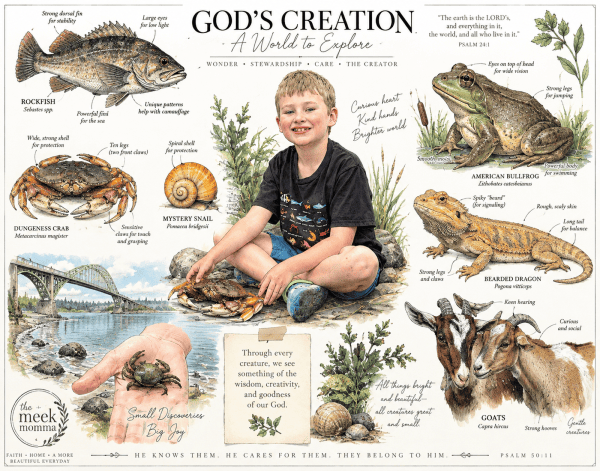
And This Makes Me Think of my son Jackson

This part is especially personal for me.

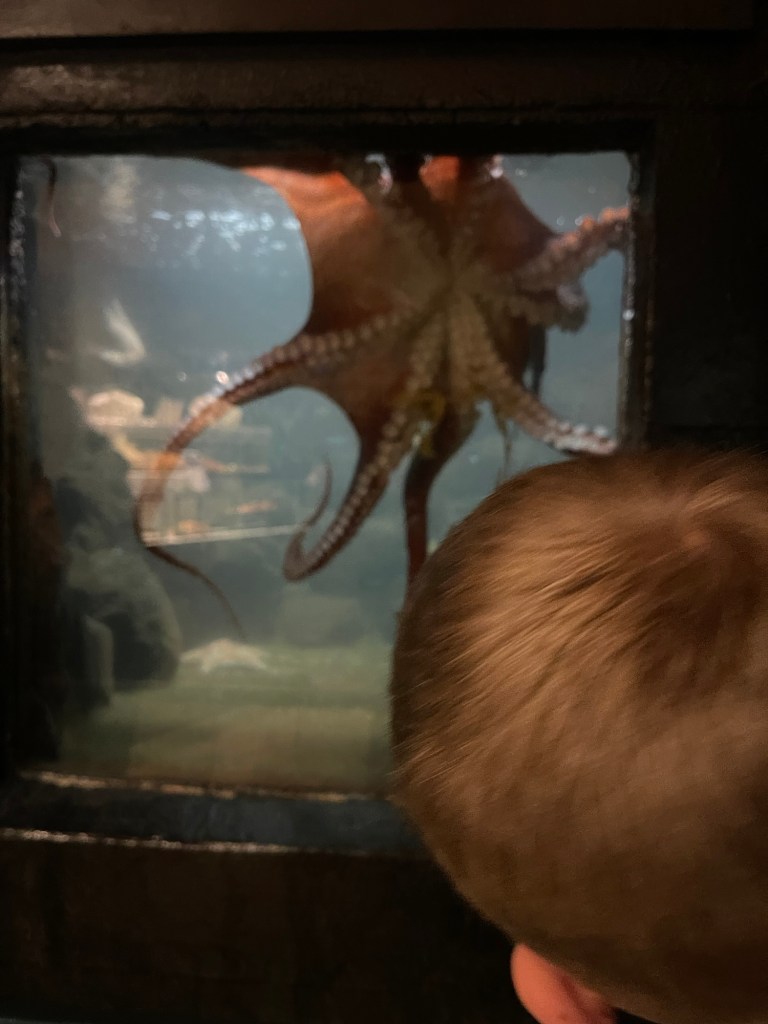
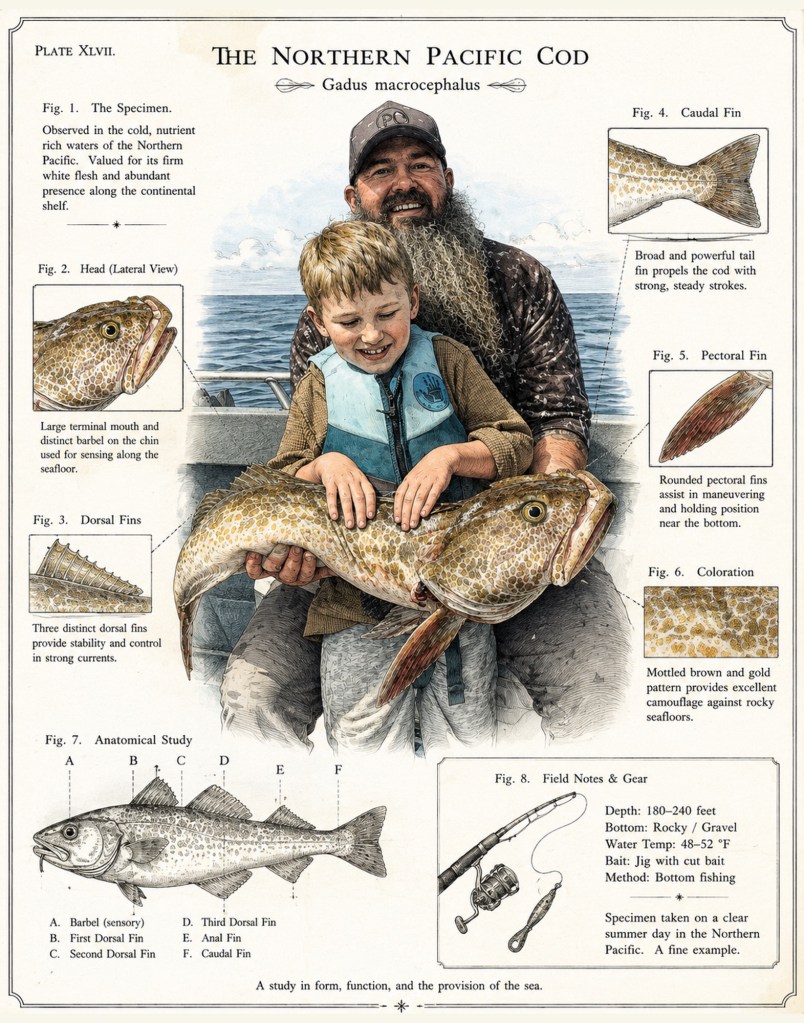
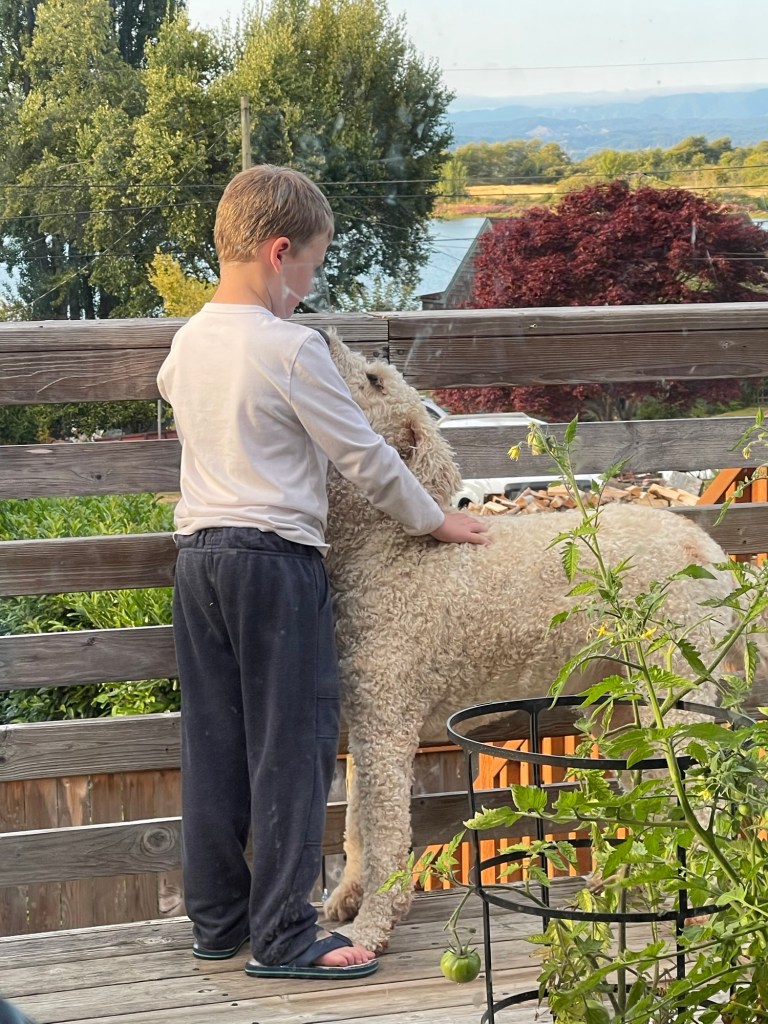
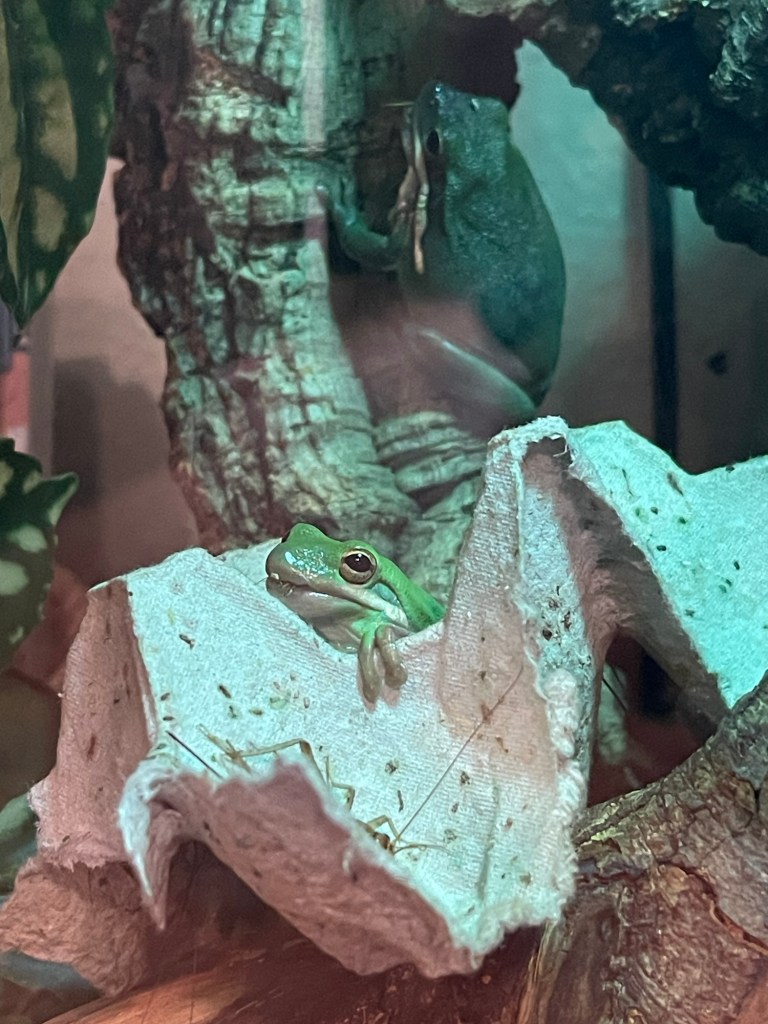
One of the greatest ways I have learned to connect my sonโ€™s heart to the heart of God has been through animals.

Jacksonโ€™s autism has created some limitations in the way he connects with other people. There are things about communication and relationships that can be difficult for him.

But his connection with animals has always been different.

It is deep.

And over the years, I have watched something beautiful happen.

Again and again, a new interest in an animal has become the beginning of a new door into learning.

A desire to care for an animal.

A desire to understand an animal.

A desire to be near an animal.

A fascination with what an animal eats or where it lives or what it needs.

And somehow, through that little creature God made, another door opens.

A connection happens.

A new question comes.

A new word.

A new understanding.

A new opportunity to teach him about responsibility, gentleness, compassion, stewardship, and the goodness of his Creator.

So many of Jacksonโ€™s breakthroughs have begun this way.

With an animal.

Really that shouldnโ€™t surprise me.

Because the God who created Jackson also created the animals he loves.

The God who knows the birds knows my son.

The God who preserved the animals through the flood knows what it means to care for His creation.

The God who told Israel not to take a mother bird along with her young teaches us that compassion is not beneath holiness.

And the God who promises a day when creation will no longer hurt and destroy is the same God who is patiently teaching my little boy to love what He has made.

What a gift.


Holiness and Compassion Belong Together

It can be tempting to read the sacrificial system and think only about blood, death, and ritual.

But underneath these instructions is a God teaching His people how to live in relationship with Him.

Holiness matters.

Life matters.

Sacrifice matters.

Creation matters.

Compassion matters.

Stewardship matters.

And ultimately, all of these things tell us something about the God who made them.

The sacrificial system reminds us that sin is serious and that approaching a holy God is not something to take lightly.

But the instructions concerning the animals remind us that the God who requires sacrifice is not cruel.

He is the Creator.

Every creature belongs to Him.

And when we finally arrive at Christ, we see the fullest expression of both His holiness and His compassion.

Jesus does not treat life casually.

He gives His own.

The spotless Lamb gives Himself.

And through His sacrifice, He begins the work of restoring what sin shattered.


The Lamb and the Restoration of All Things

There is something almost breathtaking about the fact that Scriptureโ€™s story begins with creation suffering because of sinโ€ฆ

and ends with creation being restored under the reign of God.

We begin with a garden.

We end with a renewed creation.

We begin with death entering the world.

We end with death defeated.

We begin with humanity hiding in shame.

We end with Godโ€™s people dwelling with Him.

And in the middle stands the Lamb.

Jesus.

The One through whom all things were created.

The One who cares for His creation.

The One who became flesh.

The One who gave His life.

The One who was sacrificed for sinners.

And the One who will ultimately make all things new.

So the next time I read about an animal being brought to the altar, I donโ€™t want to see only the difficulty of the sacrifice.

I want to remember the larger story.

Sin brought death into Godโ€™s good creation.

God taught His people to take life seriously.

God placed boundaries around how His creatures were treated.

God cared for animals throughout Scripture.

And one day, under the reign of the King, Isaiah tells us:

โ€œThey shall not hurt or destroyโ€ฆโ€

What an incredible promise.

What an incredible God.

And what a gift that He would use something as simple as an animal to teach a little boyโ€”and his mamaโ€”more about His heart.

The God who made them cares for them.

And perhaps, through learning to care for what He has made, we learn a little more about how to reflect the heart of the One who made us all.


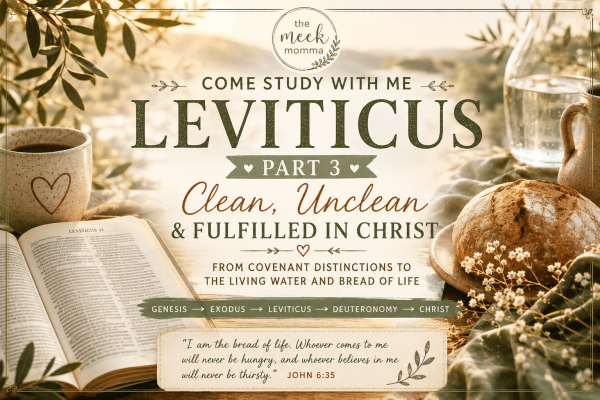
COME STUDY WITH ME

Notes from Leviticus โ€” Part 3

Clean, Unclean & Fulfilled in Christ

As we study Leviticus 11, one thing becomes clear: the distinction between clean and unclean did not begin with Moses.

In Genesis 7:2, Noah already knows the distinction between clean and unclean animals. In Genesis 8:20, he offers clean animals and birds to the LORD.

Then, in Exodus, God forms Israel as His covenant people and establishes His dwelling place among them. In Leviticus, He gives increasingly specific instructions concerning sacrifice, purity, priesthood, holiness, and food.

Deuteronomy later reiterates many of these dietary distinctions.

The pattern is unfolding:

Genesis โ†’ Exodus โ†’ Leviticus โ†’ Deuteronomy

God progressively reveals what it means for His covenant people to live in relationship with a holy God.

But what does โ€œcleanโ€ actually mean?

This is important:

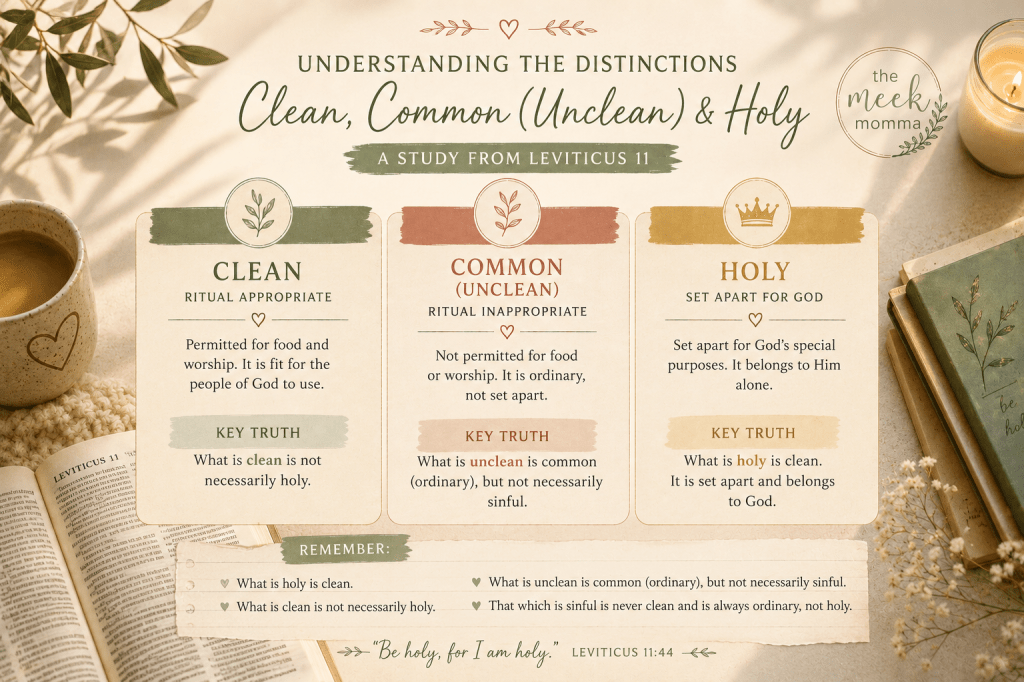
Unclean does not automatically mean sinful.

Something could be ritually unclean without being morally sinful.

Likewise, something could be clean without being holy.

These categories help us understand Leviticus more carefully:

Holy โ†’ clean
Clean โ†’ not necessarily holy
Unclean โ†’ not necessarily sinful
Sinful โ†’ never holy or clean

The purity laws were teaching Israel to recognize distinctions and boundaries as they lived in the presence of a holy God.

Then Jesus changes the conversation.

Jesus teaches that defilement is not ultimately about what enters a person from the outside, but what comes from the heart (Mark 7:14โ€“23).

In Acts 10, Peter receives a vision involving animals previously considered unclean. God tells him:

โ€œWhat God has made clean, do not call common.โ€

Peter comes to understand that the vision reaches beyond food. God was showing him that Gentiles were not to be considered spiritually unclean or excluded from Godโ€™s people.

Through Christ, the ceremonial boundaries that once distinguished Israel from the nations are fulfilled and transformed.

And this is where the story becomes beautiful.

Jesus doesnโ€™t simply make food clean.

Jesus makes people clean.

He doesnโ€™t merely provide another ritual washing.

He gives living water.

โ€œIf anyone thirsts, let him come to me and drink.โ€
โ€” John 7:37

He doesnโ€™t simply give bread to sustain physical life.

He is the Bread of Life.

โ€œI am the bread of life.โ€
โ€” John 6:35

The Old Testament repeatedly teaches us about cleansing, sacrifice, priesthood, blood, holiness, food, and access to Godโ€™s presence.

The New Testament shows us their greater fulfillment in Christ:

The sacrifice โ†’ Christโ€™s once-for-all atonement

The priesthood โ†’ Christ our great High Priest

Cleansing โ†’ Christ makes His people clean

Access to God โ†’ Christ brings us near

The bread that sustains โ†’ Christ, the Bread of Life

The water that cleanses and gives life โ†’ Christ, the Living Water

And the important thing is that we donโ€™t have to force these connections. The New Testament itself develops them.

Hebrews tells us that the sacrificial system was pointing toward something greater:

โ€œThe law has but a shadow of the good things to come.โ€
โ€” Hebrews 10:1

The Bigger Story

Leviticus is not a disconnected collection of strange rules.

It is part of a story that begins much earlier.

Genesis: God establishes His creation and we see humanityโ€™s separation from Him.

Exodus: God rescues His people and comes to dwell among them.

Leviticus: God teaches His people how to live in the presence of a holy God.

Deuteronomy: God reiterates the covenant and calls His people to faithful obedience.

The New Testament: Christ fulfills the purposes toward which these things were pointing.

And the question underneath Leviticus remains the same:

How can a holy God dwell with sinful people?

The answer that unfolds throughout Scripture is not ultimately a ritual, a sacrifice, a food, or a purification ceremony.

God Himself makes the way.

And in the New Covenant, that way is Jesus Christ.

โ€œFor by a single offering he has perfected for all time those who are being sanctified.โ€
โ€” Hebrews 10:14

Come Study With Me 2: Notes from Leviticus

Notes on the Sacrificial System

Sacrifice of some kind was a nearly universal practice among ancient peoples. Israelโ€™s sacrificial system shared certain similarities with the practices of surrounding nations, but it was also distinctly different in several important ways.

1. Israelโ€™s Absolute Monotheism

Israel worshiped one true God, Yahweh. The sacrificial system was not created by Israel as a means of manipulating multiple competing gods. God Himself gave Israel specific instructions for worship and sacrifice as part of His covenant relationship with them.

2. Sacrifice Was Connected to Holiness, Ethics, and Obedience

Israelโ€™s worship was rooted in the character of God Himself. Because God is absolutely holy, His people were called to holiness.

The sacrificial system was therefore connected to sin, repentance, atonement, forgiveness, and obedience to Godโ€™s covenant commands. Sacrifice was never intended to replace faithful obedience.

โ€œYou shall be holy, for I the LORD your God am holy.โ€
โ€” Leviticus 19:2

The prophets repeatedly reinforce this truth: God does not delight in ritual performed apart from righteousness and obedience (1 Samuel 15:22; Isaiah 1:11โ€“17; Hosea 6:6; Micah 6:6โ€“8).

3. Israel Was Forbidden to Incorporate Magic and Occult Practices

Israelโ€™s worship was not to be blended with the religious practices of the surrounding nations. God explicitly prohibited magic, sorcery, divination, necromancy, and related practices (Leviticus 19:26, 31; 20:6; Deuteronomy 18:9โ€“14).

Biblical sacrifice was never magic. It was not a technique for manipulating God or forcing Him to provide a desired outcome.

4. Israelโ€™s Sacrificial System Had a High Moral Character

The biblical sacrificial system was fundamentally different from fertility religions and other surrounding practices. Israel was prohibited from incorporating ritual prostitution, sexual immorality, occult practices, and human sacrifice into its worship (Leviticus 18:21; Deuteronomy 18:9โ€“14).

Israelโ€™s worship was to reflect the holiness of the God they worshiped.


Sacrifice Before Sinai

Sacrifice did not begin with the Mosaic covenant.

Long before Leviticus, Scripture records people offering sacrifices to God:

  • Cain and Abel โ€” Genesis 4:3โ€“5
  • Noah โ€” Genesis 8:20โ€“22
  • Abraham โ€” Genesis 12:7โ€“8 and following
  • Job โ€” Job 1:5

The biblical record clearly demonstrates that sacrifice was practiced among Godโ€™s people long before the detailed sacrificial laws given through Moses.

The Mosaic covenant therefore revealed and regulated Israelโ€™s sacrificial worship within their covenant relationship with God.


Cain and Abel: The Importance of the Worshiper

Genesis 4:3โ€“5 gives us one of Scriptureโ€™s earliest accounts of sacrifice.

Cain brought an offering from the fruit of the ground, while Abel brought the firstborn of his flock and their fat portions.

God regarded Abel and his offering, but did not regard Cain and his offering.

The text does not explicitly state that Cain offered his โ€œsecond best.โ€ What it does emphasize is that Abel brought the firstborn and the fat portionsโ€”the valuable portions of his flock.

The following conversation with Cain makes clear that the issue was not merely the physical offering. God addresses Cainโ€™s conduct and heart:

โ€œIf you do well, will you not be accepted?โ€
โ€” Genesis 4:7

The story therefore establishes an important biblical principle:

God cares about both the offering and the heart of the worshiper.


Why Cain and Abel Matter

The story appears remarkably early in Scripture, before Sinai, the tabernacle, the priesthood, or the Levitical system.

Already, Scripture is asking:

What does it mean to approach God rightly?

Cain and Abel introduce a theme that will continue throughout Scripture:

Worship cannot be separated from the heart and conduct of the worshiper.

This becomes essential for understanding the sacrifices of Leviticus. The sacrifices were not empty rituals performed mechanically. They belonged within a relationship of covenant faithfulness, holiness, repentance, and obedience.


Noah: Sacrifice and Covenant Grace

After the flood, Noah built an altar and offered burnt offerings to the LORD (Genesis 8:20โ€“22).

The LORD received Noahโ€™s offering as a pleasing aroma and then declared His commitment to preserve the regular rhythms of creation:

โ€œWhile the earth remains, seedtime and harvest, cold and heat, summer and winter, day and night, shall not cease.โ€
โ€” Genesis 8:22

The passage should not be understood as though Noahโ€™s sacrifice manipulated God or changed Him from anger to mercy.

Rather, the sacrifice occurs within the larger story of judgment, grace, and covenant promise. God graciously commits Himself to sustaining His creation despite humanityโ€™s continuing sinfulness.

This gives us an early biblical pattern:

Judgment โ†’ Sacrifice โ†’ Covenant Promise โ†’ Sustaining Grace


A Foundation for Studying Leviticus

As we enter Leviticus, we should first ask what each sacrifice meant within Israelโ€™s own covenant relationship with God.

For each sacrifice, consider:

  1. What was being offered?
  2. Who brought the offering?
  3. What was the worshiper required to do?
  4. What did the priest do?
  5. What happened to the blood and offering?
  6. What portion belonged to God?
  7. What portion, if any, belonged to the worshiper or priest?
  8. What problem or need did the sacrifice address?
  9. How did it relate to holiness, sin, forgiveness, fellowship, or thanksgiving?
  10. How does the rest of Scripture develop this theme?
  11. Where does the New Testament explicitly connect these themes to Jesus Christ?

This allows us to trace the sacrificial system toward Christ without forcing meanings onto the text that Scripture itself does not establish.


Key Thought

Sacrifice was never merely about putting something on an altar.

From the earliest pages of Scripture, sacrifice is connected with approaching God, responding to sin, worshiping rightly, honoring Godโ€™s holiness, and living in covenant relationship with Him.

Israelโ€™s sacrificial system was not unique simply because Israel sacrificed. It was unique because Yahwehโ€”the one true and holy Godโ€”revealed how His covenant people were to worship and approach Him.

As we study Leviticus, we will see the altar continually teaching Israel that:

sin is serious, God is holy, forgiveness is costly, and fellowship with God is a gracious gift.

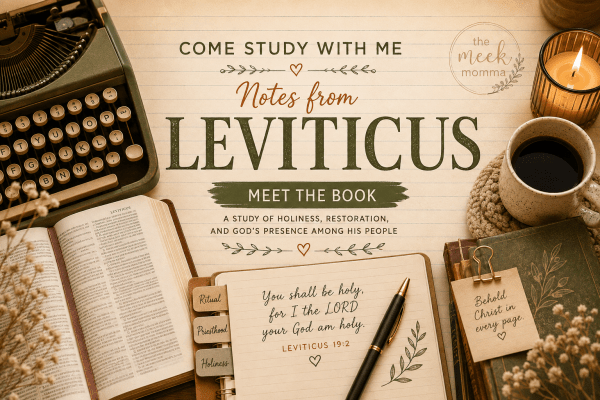
COME STUDY WITH ME

Notes from Leviticus

Post 1 โ€” Meet the Book

The book of Leviticus begins precisely where Exodus leaves off.

The tabernacle has been completed, and the glory of the LORD has filled it. Godโ€™s presence is so overwhelming that Moses is unable to enter the tent of meeting (Exodus 40:34โ€“35).

That detail is important.

Leviticus begins with a question:

How can a holy God dwell among an unholy people?

Leviticus breaks from much of the narrative structure of Genesis and Exodus and moves primarily into instructions concerning sacrifices, priesthood, purity, holiness, worship, and covenant life.

But these laws are not random regulations.

Mosesโ€™ inability to enter the tabernacle establishes the theological problem that drives the book:

God is holy, and His people are not.

God desires to dwell among His people, yet His holiness cannot simply overlook sin and impurity. Leviticus therefore explains how Israel is to approach God, worship Him, deal with sin and ritual impurity, and live as a people set apart for His presence.

The sacrificial system provided God-appointed means of atonement, purification, forgiveness, and restored fellowship within the Mosaic covenant.


Three Major Areas of Leviticus

The laws of Leviticus can broadly be understood through three overlapping areas:

1. Ritual

These instructions govern Israelโ€™s worshipโ€”particularly sacrifices, offerings, festivals, holy days, and other prescribed rituals.

2. Priesthood

These laws concern the ordination, qualifications, responsibilities, and conduct of the priests, who served in Israelโ€™s worship and ministry at the sanctuary.

3. Holiness

These instructions teach Israel what it meant to live as a people set apart to God. They address worship, morality, relationships, sexuality, food, ritual purity, justice, and everyday life.

And this is important:

Ritual impurity is not necessarily the same thing as moral sin.

Something could make an Israelite ritually unclean without that person having committed a moral offense. The purity laws distinguish between categories of clean and unclean, while the holiness laws also address moral obedience and covenant faithfulness.

Together, these laws teach Israel that life in the presence of a holy God requires distinction, reverence, and holiness.


What Do These Laws Have in Common?

Though the laws of Leviticus address many different subjects, several themes continually emerge.

They call Israel to be holy.

โ€œYou shall be holy, for I the LORD your God am holy.โ€
โ€” Leviticus 19:2

They set Israel apart from the surrounding nations.

Israel was not simply another ancient nation with another religious system. They belonged to Yahweh and were called to reflect His character.

They continually remind Israel of their covenant relationship with God.

Their worship, daily lives, bodies, homes, food, relationships, priests, festivals, and sacrifices all existed within the reality that they belonged to God.

And they prepare us to understand the need for a greater and final atonement.

The New Testament explicitly develops the sacrificial and priestly themes of Leviticus and shows their fulfillment in Jesus Christ (Hebrews 9โ€“10).

We should be careful, however, not to force Christ into every individual detail of Leviticus. Instead, we watch for the connections that Scripture itself develops and allows the biblical storyline to lead us to Christ.


The Day of Atonement

At the center of Leviticus stands Leviticus 16โ€”the Day of Atonement, or Yom Kippur.

This was the great annual ceremony in which atonement was made for the sins and impurities of Israel and the sanctuary.

Two goats were selected.

One was offered as a sin offering.

The other became the scapegoat. The high priest confessed the sins of Israel over the goat, symbolically placing their iniquities upon it, and the goat was sent away into the wilderness.

These two goats vividly communicate two dimensions of atonement:

sin requires dealing with, and sin is removed from Godโ€™s people.

The New Testament helps us see the greater fulfillment of these realities in Christ, whose sacrifice is not repeated annually but is once for all (Hebrews 9:11โ€“14; 10:10โ€“14).


Why Leviticus Matters

Leviticus may require a little more work to understand and apply than some of the more narrative books of Scripture.

But it gives us a profound picture of Godโ€™s character and His purposes.

It teaches us that:

God is holy.

Sin and impurity matter.

God desires to dwell with His people.

Atonement is necessary for sinners to approach a holy God.

God Himself provides the way for His people to draw near.

And as the biblical story continues, these themes lead us toward the ultimate fulfillment of Godโ€™s provision:

Jesus Christ, our perfect and once-for-all sacrifice.


A Simple Outline of Leviticus

Chapters 1โ€“7 โ€” The Sacrificial Offerings

Instructions concerning Israelโ€™s various offerings, including the burnt, grain, peace, sin, and guilt offerings.

Chapters 8โ€“10 โ€” The Priesthood

The ordination of Aaron and his sons, their responsibilities, and the judgment that falls on Nadab and Abihu for unauthorized worship.

Chapters 11โ€“15 โ€” Clean and Unclean

Instructions concerning clean and unclean animals, bodily conditions, skin diseases, bodily discharges, and other matters of ritual purity.

Chapter 16 โ€” The Day of Atonement

Instructions for Israelโ€™s annual Day of Atonement and the cleansing of the sanctuary and people.

Chapter 17 โ€” The Holiness of Blood and Sacrifice

Instructions concerning where sacrifices may be offered and the sacred significance of blood.

Chapters 18โ€“20 โ€” Holiness in Everyday Life

Commands concerning sexual morality, family relationships, idolatry, justice, and separation from the practices of the surrounding nations.

Chapters 21โ€“22 โ€” Priestly Holiness

Additional requirements concerning the holiness and conduct of the priests and regulations concerning acceptable offerings.

Chapter 23 โ€” Feasts and Holy Days

Israelโ€™s appointed times, including Passover, Unleavened Bread, Firstfruits, Weeks, Trumpets, the Day of Atonement, and Booths.

Chapter 24 โ€” Holy Things and Covenant Community

Instructions concerning the lampstand, the bread of the Presence, and the consequences of blaspheming Godโ€™s name.

Chapter 25 โ€” Sabbath Year and Jubilee

Instructions concerning the Sabbath year, the Year of Jubilee, land, property, debt, and care for fellow Israelites.

Chapter 26 โ€” Covenant Blessings and Curses

A covenant call to obedience accompanied by promises of blessing and warnings concerning covenant disobedience.

Chapter 27 โ€” Vows and Dedicated Things

Regulations concerning vows, dedications, valuations, and things devoted to the LORD.


The Big Picture

Leviticus is not simply a book of strange rules about sacrifices, food, priests, and purity.

It is a book answering a profound question:

How can a holy God dwell among a sinful people?

And as we study it carefully, we begin to see the answer unfolding:

God makes a way for His people to dwell in His presence.

The temporary and repeated provisions of the Mosaic covenant ultimately point us toward the greater reality revealed in Christโ€”the One whose sacrifice is sufficient once for all.

โ€œFor by a single offering he has perfected for all time those who are being sanctified.โ€
โ€” Hebrews 10:14

Blog at WordPress.com.

Up ↑