This is sort of a follow up to my previous post regarding my journey out of practicing syncretism and with it being October this word study felt timely.
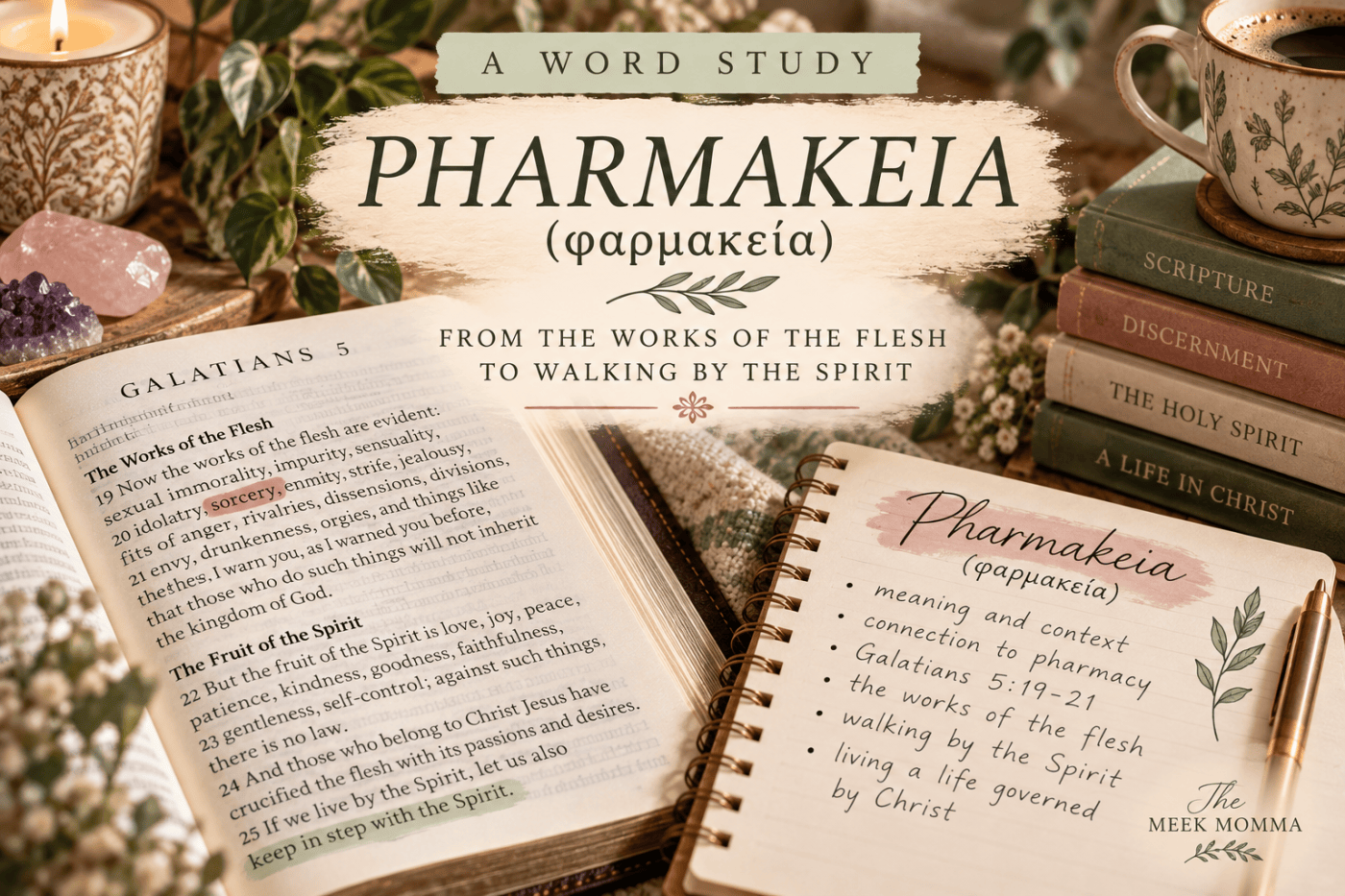
There is an interesting Greek word in the New Testament that is worth slowing down over as we study Scripture’s warnings about sorcery and occult practices. The word pharmakeia (φαρμακεία) appears in Galatians 5:20 and is commonly translated as “sorcery” or “witchcraft.” It also appears in Revelation 9:21 and 18:23.
The word is related to pharmakon, which could refer to a drug, medicine, poison, or potion. In ancient contexts, substances and potions could be associated with magical or occult practices, which helps explain the connection between this family of words and sorcery. The Greek word is also related historically to our English word pharmacy. However, this does not mean that pharmakeia simply means taking drugs, that all medicines were associated with sorcery, or that the modern practice of pharmacy is inherently occult. We need to let the context of Scripture determine how the word is being used.
What makes Galatians 5 particularly important is that Paul doesn’t mention pharmakeia in isolation. He includes it in a larger list of what he calls the “works of the flesh” (Galatians 5:19–21). This list includes sexual immorality, idolatry, sorcery, jealousy, fits of anger, rivalries, dissensions, and other sinful practices. Paul is describing a way of life that is opposed to the life God calls His people to live.
But notice where Paul takes the discussion next.
In Galatians 5:16, he writes:
“But I say, walk by the Spirit, and you will not gratify the desires of the flesh.”
After describing the works of the flesh, Paul contrasts them with the fruit of the Spirit: love, joy, peace, patience, kindness, goodness, faithfulness, gentleness, and self-control (Galatians 5:22–23).
This connection is important because the Christian response to occult practices is not merely to identify what we must avoid. It is to turn toward God and learn to walk by His Spirit. Repentance involves turning away from what is contrary to Him, but the Christian life is not sustained by avoidance alone. We are called to grow in Christlikeness as the Spirit works in us.
When I look back on my own story, I can see why this distinction matters. I once looked to crystals and stones for energy and manifestation, used tarot cards to seek answers, and pursued spiritual guidance outside of what God has revealed in His Word. At the time, I believed I could combine those practices with my belief in Jesus. I didn’t understand that following Christ required me to reconsider not only what I believed but also where I was looking for wisdom, guidance, and spiritual power.
As I began sitting under the preaching and teaching of Scripture, I started to see these things differently. My response wasn’t supposed to be an ongoing fascination with the practices I was leaving behind. It was to turn toward Christ, trust His Word, and allow His truth to reshape how I lived.
That is the distinction I want us to understand. We do not become spiritually mature simply by learning to recognize everything we should avoid. We grow as we know God through His Word, depend on His Spirit, and increasingly bring our thoughts, desires, decisions, and actions under the lordship of Jesus Christ.
Paul brings this section of Galatians to a fitting conclusion:
“If we live by the Spirit, let us also keep in step with the Spirit.”
— Galatians 5:25
The goal isn’t to become fascinated with darkness or to spend our lives looking for it around every corner. The goal is to know Christ and walk faithfully with Him. As we grow in our understanding of God’s Word, we learn to discern what is contrary to Him and to cultivate what honors Him.
For me, repentance began to take a tangible form when I gathered up the objects I had once considered spiritually meaningful and threw them away. But removing those objects was not the whole of the Christian life. It was one expression of a deeper change: I was learning that Jesus was not meant to be one spiritual authority among many in my life. He is Lord, and I am called to follow Him.
The question is not only, “What must I turn away from?” It is also, “How can I walk more faithfully with Christ?”


Leave a Reply